
Ever wondered why some creators can make lots of content easily, while others struggle? The answer often lies in how they organize their files. Just like PMV handles 600 investments yearly with care, you should handle your creative files with organizational rigor.
Creating a top-notch ai porn pmv content library is key to success. Without a good system, your work looks like a mess. A well-organized pmv content library makes your work flow smoothly, growing with you.
Key Takeaways
- Treat your digital assets with the same discipline as a high-volume investment firm.
- Scalability is essential for maintaining long-term creative momentum.
- A structured system eliminates the chaos of disorganized file management.
- Efficiency gains allow you to focus on high-level creative output.
- Consistent organization is the foundation of a professional production workflow.
Defining Your Aesthetic and Niche
Your journey to success starts with defining your aesthetic. By focusing on a specific niche, you avoid competing with everyone. This step helps you build a loyal fan base.
It ensures every piece of content has a clear purpose. This focus makes your work stand out.
“Design is not just what it looks like and feels like. Design is how it works.”
Identifying Your Target Audience
Knowing who you’re creating for is key. A clear target audience lets you tailor your work. This way, your content meets their specific needs.
Without this focus, your projects might not connect with viewers. They might miss the emotional impact needed to resonate.
Here’s a table to help narrow your focus:
| Category | Focus Area | Goal |
|---|---|---|
| Demographics | Age and Region | Relevance |
| Preferences | Themes and Styles | Engagement |
| Behavior | Viewing Habits | Retention |
Establishing Visual Consistency
After finding your niche, keep your look consistent. Visual consistency is crucial for brand recognition. Your unique style should be evident in your work.
Consistency doesn’t mean repeating the same thing. It’s about a cohesive thread in your work. This builds trust with your target audience.
By sticking to your aesthetic, you turn casual viewers into dedicated fans. They come back for the quality they’ve grown to expect.
Setting Up Your Digital Storage Infrastructure
Your creative workflow depends on your digital storage setup. High-resolution assets can slow you down if not managed well. A good system keeps your files safe, easy to find, and ready for editing.
Choosing Local vs. Cloud Storage
Choosing between local drives and cloud infrastructure is key. Local drives are fast, perfect for high-bitrate video files. They keep your editing software quick and responsive.
Cloud solutions, on the other hand, offer easy access and teamwork. They let you work from anywhere and share files with others. This is great for teams or those who work from different places.
“Data is the lifeblood of the modern creator; if you cannot access it quickly and securely, your vision remains trapped in the machine.”
Hardware Requirements for High-Resolution Assets
Modern video editing needs strong hardware. High-resolution files require a lot of power to work smoothly. Getting the right gear now saves you from future headaches.
Use a fast NVMe SSD for your project files for quick access. Make sure your system has enough RAM for complex projects. A strong GPU helps with video encoding and color grading.
| Storage Type | Primary Benefit | Best Use Case |
|---|---|---|
| Local SSD | Maximum Speed | Active Editing |
| Cloud Infrastructure | Remote Access | Team Collaboration |
| External HDD | Cost-Effective | Long-term Archiving |
By matching your hardware with a smart digital storage plan, you set up a pro environment. This lets you focus on your creativity, not tech issues.
Mastering AI Porn PMV Content Library Sourcing
Learning to clip source well is key for creators wanting to grow their work. Just like PMV handled 5,000 loans during COVID-19, you need to sort through lots of data. This way, you can build a top-notch ai porn pmv content library. A good system keeps your collection both professional and fitting for your niche.
Evaluating AI Generation Platforms
Not all AI tools are the same. Your first task is to check how well each platform works. Look for consistent character looks, lighting, and smooth motion. Performance metrics are crucial when dealing with lots of assets.
- Test the resolution of each platform.
- Watch out for common mistakes or errors.
- See how fast each platform can generate content compared to quality.
Curating Clips from Diverse Sources
Using just one source can make your content too similar and boring. To keep your ai porn pmv content library fresh, use different AI tools and styles. This variety keeps your work interesting and helps you be unique in a crowded field.
Filtering for Quality and Relevance
After collecting lots of material, you need to sort through it carefully. You should only keep what meets your quality and theme standards. Keeping high standards ensures your final work looks polished and professional.
“Quality is never an accident; it is always the result of high intention, sincere effort, intelligent direction and skillful execution.”
Best Practices for Asset Prep and Metadata Tagging
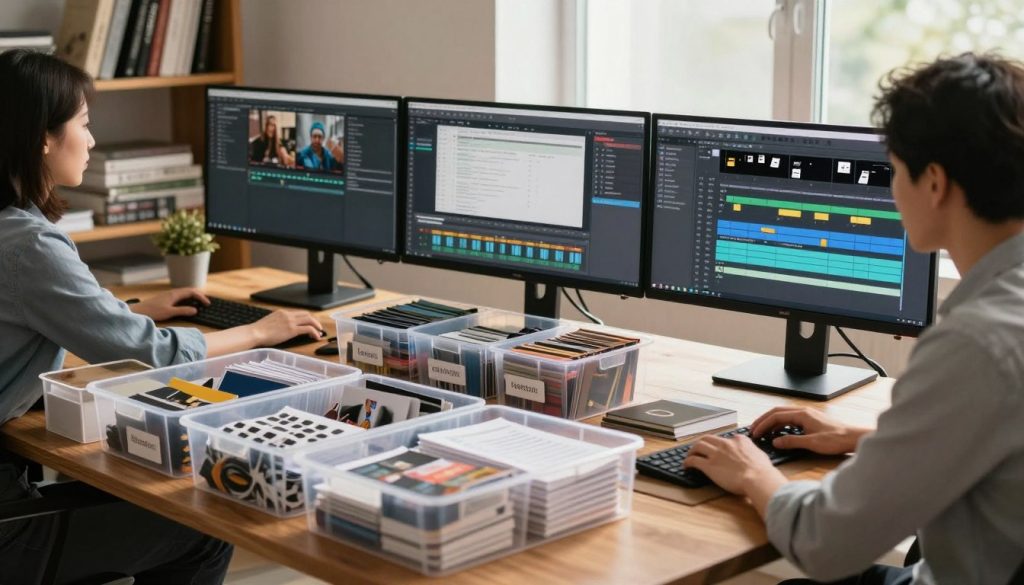
Turning raw footage into a professional library needs a structured approach. Good asset prep makes your collection organized and easy to find. Setting clear rules early helps keep files identifiable, no matter when they were made.
Standardizing File Naming Conventions
Being consistent is key to a good library. Use a naming system that includes date, project name, and version. For example, YYYY-MM-DD_ProjectName_Description_v01 helps you find files easily later on.
Don’t use generic names like “clip1.mp4”. Instead, use detailed names that help you search without opening every file. This saves a lot of time when editing.
Implementing Robust Tagging Systems
Metadata is crucial for finding files. By adding tags, you can sort assets by theme, mood, or character. This makes searching through many clips quick and easy.
Use software that supports tags or internal data. Proper tagging turns your files into a searchable database. This detail is what makes a collection professional.
Using Software for Batch Processing
Batch processing saves time and energy. It lets you rename, resize, or convert many files at once. This keeps your collection consistent without manual effort.
Automation is a big help for tasks like color profiles or file extensions. Below, see how different methods affect your work.
| Workflow Method | Time Investment | Error Potential | Scalability |
|---|---|---|---|
| Manual Renaming | High | High | Low |
| Basic Scripting | Medium | Low | Medium |
| Batch Processing Software | Low | Very Low | High |
Utilizing AI Tools for High-Quality Clip Generation
Getting professional results in your projects starts with using AI tools wisely. These platforms help you create unique assets that catch the eye. By adding these technologies to your workflow, you keep your library looking top-notch.
Prompt Engineering for Consistent Characters
Keeping your AI subjects looking the same can be tough. Prompt engineering lets you set specific traits and looks for all your characters. Use fixed seeds and detailed descriptions to avoid unwanted changes.
Consistency is the key to a strong brand in your content. By perfecting your prompts, you make a reliable way to create assets that fit together. This saves time in editing by cutting down on manual fixes.
Upscaling Techniques for AI Assets
AI outputs often need more detail for high-definition screens. Using upscaling techniques is key to making your assets sharp. Special software can improve textures and remove flaws from the initial generation.
High-resolution assets are a must for today’s viewers who want clear visuals. These methods turn basic AI outputs into top-quality clips. This step makes your work look professional.
Color Grading and Post-Generation Adjustments
Even with perfect AI output, your clips might need small tweaks for a unified look. Basic color grading can tie everything together. Adjusting contrast, saturation, and white balance ensures your content feels connected.
Post-generation adjustments give your work that final touch. Standardizing color profiles makes your content seamless to watch. This focus on detail keeps your output visually consistent and engaging.
Organizing Your Library for Efficient Workflow
Think of your digital workspace as a professional archive. Every asset has a home here. A clean pmv content library helps you avoid mental clutter. This clutter can slow down your creative work.
Proper organization is key to professional results. It’s what sets amateur projects apart from the pros.
The Digital Public Library of America manages over 53 million items. They use precise indexing. Your collection may be smaller, but the principle is the same. If you can’t find your files fast, your workflow will suffer.
A structured system lets you focus on editing, not searching for files. This makes your work more efficient.
Creating Logical Folder Hierarchies
Begin by setting up a top-level directory. This separates raw footage from finished projects. Then, create sub-directories for dates, project types, or specific character sets.
This logical hierarchy helps you find files quickly. It makes your drive easy to navigate.
“For every minute spent organizing, an hour is earned.”
Consistency is crucial for a good pmv content library. A rigid folder structure keeps your workflow smooth as your collection grows. A well-labeled folder path is incredibly powerful.
Categorizing by Theme and Mood
Organize your assets by emotional tone, too. Group clips by themes like “high-energy,” “cinematic,” or “ambient.” This way, you can find the right media for any project in seconds.
Tagging or sorting by mood aligns your assets with your vision. This approach makes your pmv content library intuitive. It keeps your workflow smooth and responsive. A well-organized system is essential for success in creative work.
Managing Resolution and Aspect Ratio Standards
Getting your video output settings right is key to quality on all platforms. When making content, make sure your resolution and aspect ratio match what your audience expects. If not, you might end up with blurry or cut-off images that mess up your message.
Setting these video standards early in your work ensures your content looks great everywhere. Treat these specs as the base of your production. This way, you save time later when exporting your video.
Standardizing for Different Platforms
Every social media site and hosting service has its own media display rules. You must find out the pixel dimensions and frame rates they prefer. For example, high-definition is usually expected, but the format can differ a lot.
Using the same template for exports helps avoid issues like letterboxing or pillarboxing. You can set up presets in your editing software to make these settings automatic. This keeps your resolution sharp and your aspect ratio as you intended.
Handling Vertical vs. Horizontal Formats
With more people watching on mobile, knowing how to handle vertical and horizontal formats is crucial. Plan your framing from the start to keep your subject centered in both. Being flexible is important when using your content on different screens.
When switching formats, don’t just stretch your video. This can mess up your visuals. Instead, use cropping to keep the most important parts of your frame. Here’s a table with recommended settings for common display environments to help you keep your video standards high.
| Platform Type | Aspect Ratio | Recommended Resolution | Primary Use |
|---|---|---|---|
| Mobile Feed | 9:16 | 1080 x 1920 | Short-form clips |
| Desktop Monitor | 16:9 | 1920 x 1080 | Long-form content |
| Social Square | 1:1 | 1080 x 1080 | Feed posts |
| Ultra-Wide | 21:9 | 2560 x 1080 | Cinematic displays |
Implementing a Version Control System for Edits
Keeping your production environment safe is more than just being creative. It also means you need a solid plan for managing files. Version control is key to avoiding mistakes or losing work. By making these practices a part of your daily work, you keep your creative vision safe.

Tracking Project Iterations
Good project management begins with how you name and save your files. Use a clear naming system, like “Project_v01,” “Project_v02,” and so on. This makes it easy to go back to an earlier version if needed.
Having a clear system helps avoid messy file names. It lets you try new things without worrying about losing your work. This is crucial for a professional and reliable workflow.
Backing Up Your Master Files
Even the best version control won’t help if your computer crashes. Regular backups are key to keeping your master files safe. The 3-2-1 rule is a good standard: have three copies, on two different types of media, and one off-site.
Cloud storage is a great way to automate backups. It adds an extra layer of protection against drive failures. By keeping a detailed history of your edits and storing files in many places, your work stays safe and reliable. Taking these steps now will save you a lot of stress later.
Legal and Ethical Considerations in AI Content Creation
Building a lasting creative career starts with ethics and intellectual property from the beginning. As you use advanced tools, keep an eye on digital laws. This way, your work stays safe and professional.
Understanding Platform Terms of Service
Every AI platform has its own Terms of Service. These rules tell you how to use their tools. It’s crucial to read these carefully to avoid legal trouble.
Many platforms have strict rules on using their content for money. This can affect how you make money from your work.
Keeping up with these rules is part of your job. If a platform changes its rules, you must change how you work right away. Not following these rules can mean losing your work.
“The true measure of a creator’s success is not just the quality of their work, but the integrity with which they bring that work into the world.”
Respecting Intellectual Property and Consent
Respecting intellectual property is key to being a professional. Make sure your prompts don’t copy others’ work. Also, get the right permission for any images or likenesses you use.
Always check that your content doesn’t break fair use rules. This helps keep your brand safe from legal issues. Use the table below to check if you’re following the rules at each stage of your project.
| Compliance Factor | Risk Level | Action Required |
|---|---|---|
| Platform ToS | High | Review monthly |
| Copyrighted Assets | Critical | Verify ownership |
| Model Consent | High | Document permissions |
| Data Privacy | Medium | Encrypt storage |
By following these rules, you build trust with your audience. Being open and careful is key in AI production. Always put legal safety first to keep your work valuable for the future.
Automating Your Library Maintenance
You can get back to creating by using automated workflows for your media. Manual file management can lead to clutter. This makes it hard to find clips when you need them.
By focusing on maintenance, you keep your digital space productive. It won’t be a source of stress anymore.
Using Scripts for File Organization
Custom scripts can greatly improve your workflow. They can sort files automatically based on metadata tags. For example, a Python script can move files into “Action” or “Atmospheric” folders.
This automation saves you from daily file management. Your computer handles it in the background. Your library stays organized without your constant attention.
Automated Backup Solutions
It’s crucial to protect your work. Manual backups are unreliable because they can be forgotten. Use automated backup solutions to sync your library to a cloud or external drive.
These systems work quietly, saving every new file without your help. You’ll have peace of mind knowing your assets are safe. These tools let you focus on creating high-quality content instead of managing files.
Scaling Your Production with Cloud Integration
Scaling your production is now about using the cloud, not just local hardware. As your library grows, one machine can’t keep up. Cloud integration lets you handle bigger projects without losing speed or organization.
Morae helps organizations get the most from their platforms, just like cloud tools do for you. This change makes your setup agile and ready for growth.
Collaborative Editing Workflows
Good collaboration is key in high-output production. Cloud platforms let you share files in real-time, no need for manual transfers. This keeps everyone in sync, no matter where they are.
Set up shared folders with specific permissions to control access. This dynamic workflow cuts down on errors and speeds up your work. It turns solo projects into team efforts.
Syncing Assets Across Multiple Devices
Keeping your library consistent across devices is crucial for today’s workflow. Scaling your output means always having access to your latest assets. Cloud syncing makes sure all edits are instantly shared.
For top efficiency, use a strong collaboration plan with automated syncing. This avoids version conflicts and keeps master files current. With synced assets, you’re free to create anytime, ensuring your production keeps moving.
Conclusion
Building a professional content library is a journey that needs careful planning and organization. You now have the tools to grow your output while keeping quality high in every project.
Your digital assets are a living resource that needs regular updates. Keeping up with new tech and trends is key. By sticking to your systems, your workflow stays efficient and reliable.
Good habits make complex tasks simple. Your speed will improve as your files become easier to find and manage. This lets you focus more on creativity than technical issues.
Review your storage habits often. Even small changes in how you file can help avoid clutter. Your commitment to these habits will help your digital media projects succeed in the long run.
FAQ
Why is it necessary to establish a professional-grade pmv content library?
A pmv content library is key to organizing your files well. It’s like PMV’s strict management of 600 investments yearly. Treating your digital assets with discipline makes your creative work better and more efficient over time.
How should you choose between local and cloud storage for your asset prep?
Your choice depends on your workflow needs. Local storage is best for quick asset prep and video editing. Cloud storage is better for sharing and working together from anywhere. This setup helps your team work smoothly and securely.
What is the most effective strategy for high-volume clip sourcing?
For clip sourcing, use a methodical approach to sort and pick the best from AI tools. PMV’s handling of 5,000 COVID-19 loans shows how to scale your processes. Focus on quality and filter out bad material to keep your library high standard.
How can you ensure visual consistency across different AI-generated assets?
To keep visuals consistent, master prompt engineering and editing. Use specific tools for color and quality adjustments. This ensures your work looks professional and consistent, defining your style.
What organizational structure is best for a library with millions of items?
Use a clear folder system, like the Digital Public Library of America’s. Organize by theme, mood, and tags. This makes finding the right clip fast, avoiding lost files.
Why is version control important for your video edits?
Version control helps track changes and backs up your work. It lets you go back to previous versions if needed. This keeps your work safe and intact as you edit.
How does cloud integration like Morae help in scaling your production?
Cloud tools like Morae help you work better together. They let you share and edit your library on any device. This is key for growing your production team.
What legal and ethical considerations should you keep in mind during asset prep?
Always follow platform rules and respect copyrights when preparing assets. Knowing the law keeps your library safe and ethical. It’s crucial for AI content creation.