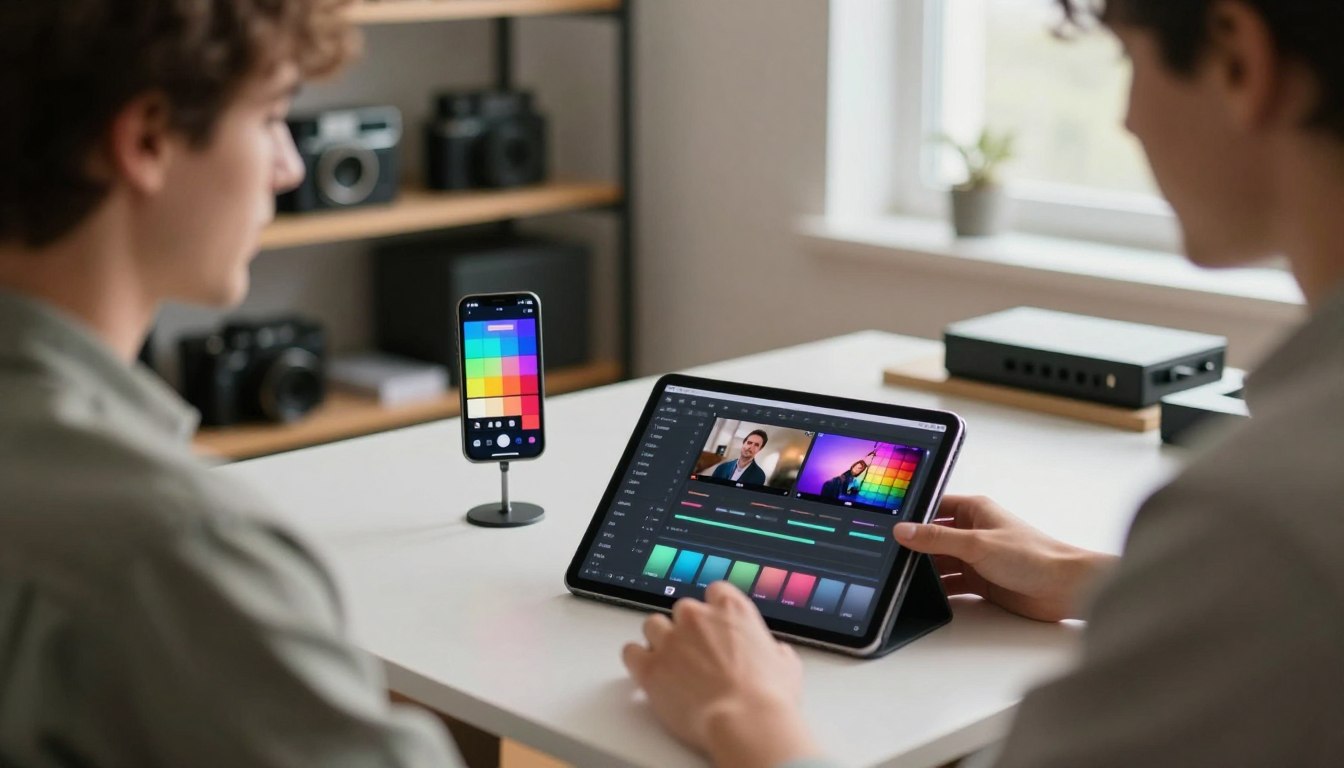
Ever thought you could make top-notch videos without a big computer? Many think editing needs expensive gear, but things are changing fast.
Now, you can use today’s mobile devices to create pro-quality ai porn pmv mobile workflow. This lets you edit freely from anywhere in the world.
With the right software and hardware, your work can match studio standards. Learning this mobile workflow makes editing quick, easy, and effective.
Key Takeaways
- Discover how to transition from desktop editing to a portable, high-performance setup.
- Learn the technical nuances required to master an efficient production process on handheld devices.
- Understand how modern hardware enables professional-grade results on the go.
- Gain the freedom to create and edit content from any location.
- Optimize your creative output by utilizing the latest tools designed for handheld video production.
Optimizing Your Hardware for AI Porn PMV Mobile Workflow
Your hardware choices affect your production quality and speed. For a smooth ai porn pmv mobile workflow, pick devices that handle high-resolution rendering well. The right tech lets you focus on your creative vision, not technical issues.
Selecting the Right Tablet or Smartphone
Look for a powerful processor and at least 8GB of RAM. These are key for handling complex video layers and AI assets. Also, a high-resolution display with accurate colors is crucial for professional-looking outputs.
“Technology is best when it brings people together and allows them to express their creativity without friction.”
Managing Storage and Cloud Syncing
High-quality videos take up a lot of space. So, managing storage well is essential. Use a mix of fast local storage and reliable cloud services to keep things organized.
Make sure your cloud sync settings are set for large files. This avoids slowdowns in your ai porn pmv mobile workflow. Also, clear your cache often to keep editing smooth.
Essential Accessories for Precision Editing
When editing on a small screen, precision is crucial. Add a high-quality stylus to your tools for precise cuts and keyframing. A stable tripod is also key for smooth footage.
Other must-haves include portable SSDs for fast file transfers and good headphones for audio checks. A solid hardware setup supports your ai porn pmv mobile workflow from start to finish.
Choosing the Best Mobile Video Editing Software
Starting a top-notch pmv mobile workflow means picking the right tools. The software you choose affects how well you can edit and refine your projects anywhere.
Comparing LumaFusion and CapCut for Mobile
LumaFusion is a powerhouse for those needing detailed editing. It offers a desktop-like experience, perfect for complex projects.
CapCut, on the other hand, is great for quick edits and social media. It’s perfect for making content fast with cool effects and easy transitions.
Utilizing Adobe Premiere Rush for Cross-Platform Sync
Adobe Premiere Rush is key for creators using different devices. Its cloud synchronization keeps your files safe, no matter where you work.
This makes sure your work is always up-to-date. You can start editing on your phone and finish on your computer.
Understanding Touch UI Limitations and Advantages
Touch interfaces offer a special way to work with your media. You can easily move through timelines and make cuts with intuitive gestures.
But, touch interfaces have their downsides, like small screens and accidental taps. Getting good at your pmv mobile workflow takes time, but the benefits are worth it.
Sourcing and Organizing Your AI-Generated Assets
Keeping your media library tidy is key to a smooth pmv mobile workflow. When you have many images or clips, finding the right one can be hard if your storage is messy. A clear system helps you focus on editing, not searching for files.
Efficient File Management on iOS and Android
Both iOS and Android have great file managers for your mobile organization. On iOS, the Files app lets you make folders on your device or in iCloud Drive. Android users can use apps like Files by Google to keep their files organized, which is crucial for a pmv mobile workflow.
Start each project with a master folder. Then, sort your assets into sub-folders like “Raw AI,” “Music,” and “Final Exports.” This keeps your gallery tidy and prevents chaos.
Using Cloud Storage to Bridge AI Generators and Editors
Cloud storage connects your AI tools and mobile editors. Syncing your files to Dropbox, Google Drive, or iCloud makes them available everywhere. This is essential for a modern pmv mobile workflow, letting you edit without manual transfers.
“For every minute spent organizing, an hour is earned.”
Cloud services also protect your work. If your device fails, your files are safe on other devices. This reliability is vital for complex projects needing many changes.
Naming Conventions for Quick Asset Retrieval
Use a consistent naming system to save time. Instead of “Image1.png,” use tags like “2023-10-ProjectA-Character-01.png.” This makes finding files much easier.
| Storage Solution | Sync Speed | Ease of Use | Best For |
|---|---|---|---|
| iCloud Drive | High | Excellent | iOS Ecosystem |
| Google Drive | Medium | Good | Android/Cross-Platform |
| Dropbox | High | Very Good | Large File Syncing |
By sticking to these habits, your pmv mobile workflow stays efficient and grows. A tidy library lets you focus on creating, not managing files. Consistency is key to mastering mobile editing.
Setting Up Your Project Workspace
Working with a touch ui means your project setup is key to success. A messy interface can cause frustration, especially on small screens. A clear workflow helps keep your focus on the final product, not lost files.
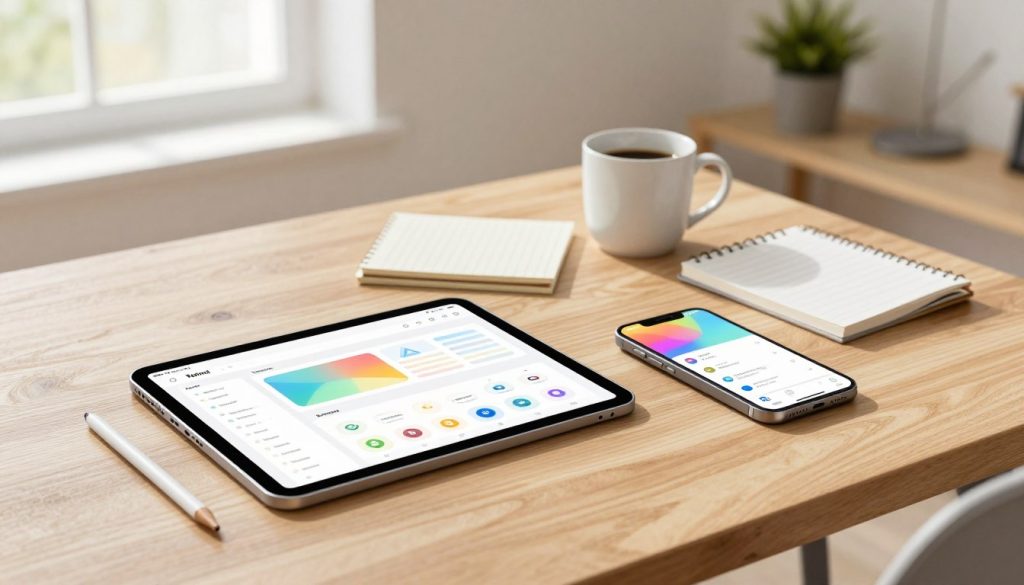
Configuring Sequence Settings for Social Media
Before editing, set your sequence settings for social media. Each platform has its own aspect ratio for correct display. Always verify your resolution before adding clips to the timeline.
- Vertical (9:16): Ideal for TikTok, Instagram Reels, and YouTube Shorts.
- Square (1:1): Best for standard Instagram feed posts.
- Landscape (16:9): Standard for traditional YouTube videos.
Importing Media and Organizing Bins
Good media management is crucial with a touch ui. Start by importing assets into bins or folders. This keeps your project organized and prevents chaos.
Organize media by type, like raw footage and audio tracks. Separating elements helps you work faster. Consistency is key for efficient editing.
Establishing a Consistent Folder Structure
Having a reliable folder structure is essential. It’s just as important on mobile devices as on desktops. This way, you can find your assets easily, even later.
Use a standard naming convention for projects. Organized files reduce errors and keep your touch ui workflow smooth. A well-organized workspace is crucial for professional editing.
Mastering the Timeline on Touch Interfaces
Learning to use a mobile device’s timeline is a big change. Unlike using a mouse and keyboard, a touch ui uses your natural movements. By changing how you interact, you can work faster.
Navigating the Timeline with Gestures
Start by learning simple finger gestures. Use a pinch-to-zoom gesture to zoom in or out. This helps you see both the big and small details.
Dragging your finger across the screen pans your project. Most editing apps let you slide the playhead to move through footage. This makes editing feel natural.
Precision Trimming and Cutting Techniques
Getting precise edits is easy with the right tools. Use the precision trimming handles to adjust clips accurately. Many apps have a snap-to-grid feature for perfect cuts.
For quick cuts, use the split tool. Precision is key, so zoom in to make sure your cuts are right. This ensures high-quality work on any mobile device.
Managing Multiple Video and Audio Tracks
Working on complex projects means managing many tracks. Use track headers to hide or mute layers. This keeps your workspace tidy.
Effective track management lets you layer B-roll and sound effects. If it gets too crowded, collapse tracks. This keeps your editing experience smooth and stress-free.
Syncing Visuals to Music Beats
Creating a professional PMV needs a strong bond between visuals and music rhythm. Editing on-the-go means keeping your clips and audio in sync. This makes your video feel more real and polished.
Identifying Key Beats in Your Audio Track
Listen to your audio track a few times to find its natural structure. Look for the drop, heavy percussion, or melody changes. These are key moments for your visual story.
Mark these sections in your mind to plan your most impactful clips. Focus on the rhythmic peaks to make your video feel planned, not random.
Using Markers for Precise Alignment
Most mobile editing apps let you drop markers on the timeline while listening to audio. This is a big help when editing on-the-go, as it lets you plan your edit without a desktop.
With markers set, you can snap your clips to these points. This precision alignment ensures every cut is exactly where the music wants it.
Applying Transitions to Match Rhythmic Changes
Transitions should enhance the music, not take away from it. Use quick cuts or flashes for fast beats and smooth dissolves for slow melodies.
Aligning transitions with rhythmic changes creates a seamless flow. This guides the viewer through your edit. Mastering this will boost your production quality, even when editing on-the-go.
Applying Effects and Color Grading on the Go
Editing on-the-go doesn’t mean you can’t achieve professional results. With color grading and visual effects, you can turn raw clips into stunning, cinematic pieces. These can grab your audience’s attention.
Utilizing Built-in Color Correction Tools
Today’s mobile editing apps have powerful color correction tools. Start by tweaking the exposure, contrast, and white balance to make your footage look natural.
Apps let you use color wheels or curves to tweak shadows and highlights. Consistency is key. Keeping adjustments similar across clips ensures a professional look in your project.
Adding Creative Filters and Overlays
After correcting your footage, use creative filters to set a mood. Whether it’s a vintage look or a modern contrast, filters can change your style instantly while you work on-the-go.
Overlays like light leaks or film grain add texture and depth. They help make your visuals more polished, even with AI-generated assets.
Keyframing Effects for Dynamic Visuals
Keyframing is key for engaging visuals. It lets you set start and end points for effects like scale, position, or opacity. This way, you can create smooth, professional transitions and animations.
Try easing settings to make your movements feel natural. Mastering these controls keeps your PMV engaging from start to finish, even when editing on-the-go.
Integrating AI-Enhanced Transitions and Effects
You can now use artificial intelligence to make your video projects better while working on-the-go. Mobile editing has become more powerful, thanks to tools once only found on desktops. These smart features save you time and make your content look more polished.
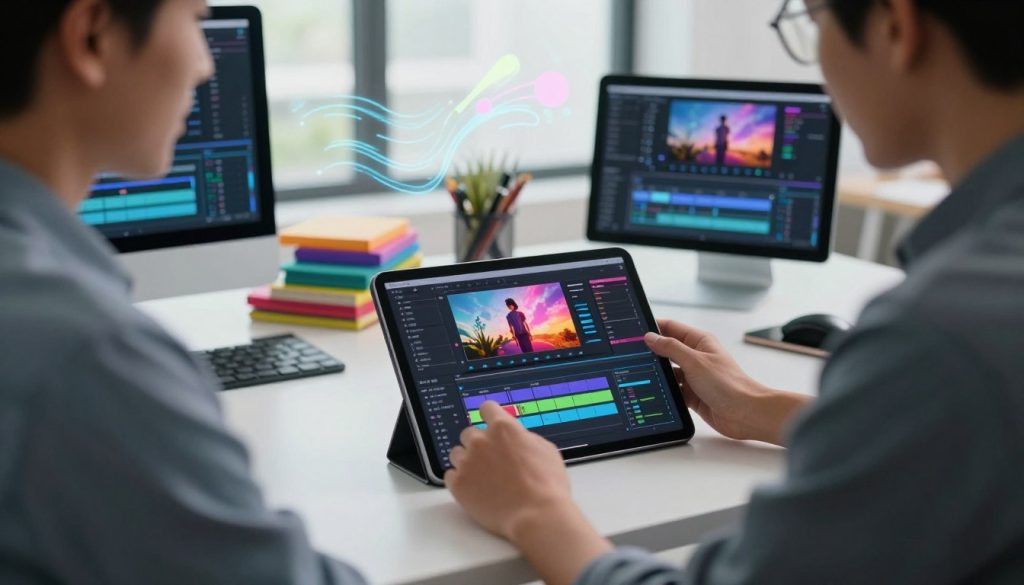
Leveraging AI Plugins for Smooth Transitions
AI plugins let you make complex, professional transitions easily. They analyze your footage to find the best times for cuts and motion blur. This automation means you don’t have to spend time on frame-by-frame animation. You can focus on your story while working on-the-go.
Automating Visual Enhancements
Software like AliceVision Meshroom can do complex tasks like 3D reconstruction or color grading. These tasks take a lot of time on mobile devices, but the results are worth it. Automating these tasks lets your device handle the hard work, making your final product look sharp and professional.
Balancing AI Effects with Manual Editing
It’s important to mix AI effects with your own creative touch. Relying too much on software can make your project look generic. By controlling key parts manually, you keep your project unique and authentic, even when editing on-the-go.
| Feature | AI-Driven Editing | Manual Editing |
|---|---|---|
| Speed | High Efficiency | Time-Intensive |
| Precision | Algorithm-Based | Creative Control |
| Style | Consistent/Standard | Unique/Personal |
| Complexity | Handles Heavy Tasks | Requires Skill |
Audio Mixing and Sound Design
Don’t overlook sound design when editing on-the-go. Your audience will notice the difference. High-quality audio adds emotional weight that visuals alone can’t provide. With a few simple techniques, your production will sound as good as it looks.
Adjusting Levels for Clarity and Impact
First, balance your audio tracks to avoid distortion. Keep your main audio, like voiceovers or dialogue, clear above the background music. Consistency is key when mixing clips from different places.
Use gain controls to even out levels across your timeline. If music is too loud, lower it by three to six decibels. This makes your story more immersive for viewers.
“Sound is fifty percent of the experience. If the audio is poor, the viewer will lose interest regardless of how beautiful the visuals are.”
Adding Sound Effects to Enhance Visuals
Sound effects, or SFX, can make your story better. Even when editing on-the-go, add ambient noises to make scenes feel real. Think of sounds like wind, footsteps, or hums to add texture.
Make sure these effects don’t overpower. They should support the visuals without distracting from them. Use a separate audio track for these effects to control their volume.
Exporting High-Quality Audio for Mobile
After perfecting your mix, choose the right export settings. Most mobile platforms prefer AAC or MP3 at high bitrate. Always use 48kHz sample rate, the standard for video production.
| Audio Format | Bitrate | Best Use Case |
|---|---|---|
| AAC | 320 kbps | High-quality mobile streaming |
| MP3 | 256 kbps | General social media sharing |
| WAV | Uncompressed | Archival and master copies |
Follow these export guidelines to keep your audio clear on different devices. These steps, even when working on-the-go, ensure your PMV looks and sounds polished and professional every time.
Exporting and Rendering Your Final PMV
The last step in your creative journey is making your edited timeline into a final video file. It’s important to find the right balance between how clear the video looks and how big the file is. When you’re on-the-go, these choices affect how fast you can share your work.
Selecting Optimal Export Settings for Quality
For the best video quality, use the H.264 or HEVC codec. These are great for mobile devices because they save space without losing quality. Make sure the resolution and frame rate match your original footage, usually 1080p or 4K.
Bitrate is key for your video’s quality. A higher bitrate means better quality but a bigger file size. For most social media, a bitrate of 15 to 30 Mbps is perfect for HD videos.
Managing Render Times on Mobile Devices
Rendering complex videos can be hard on your device. Mobile devices can get too hot or run out of battery fast. To avoid this, close other apps before you start exporting.
Keep your device plugged in if it can. This stops it from slowing down to save battery. Efficient resource management helps your device stay fast while making your video.
Preparing Files for Different Platforms
Each social media platform has its own video requirements. You need to adjust your export settings so your video looks good everywhere. Check the recommended aspect ratios and file sizes before you start.
Here’s a table to help you prepare for popular platforms:
| Platform | Aspect Ratio | Recommended Codec |
|---|---|---|
| Instagram/TikTok | 9:16 | H.264 |
| YouTube | 16:9 | HEVC |
| Twitter/X | 1:1 or 16:9 | H.264 |
Adjusting your export settings for each platform ensures your video looks great everywhere. These extra steps on-the-go make your final PMV look professional.
Troubleshooting Common Mobile Editing Issues
Technical problems can stop your creative flow when editing on a mobile device. Even top software can face issues that slow you down. Knowing how to fix these problems quickly keeps your project moving.
Resolving App Crashes and Performance Lags
Performance issues often come from not enough memory or outdated software. If your app freezes, try these steps to fix it:
- Clear the app cache to free up space.
- Look for updates in your app store to keep things running smoothly.
- Close apps running in the background that use a lot of RAM.
- Restart your device to clear all memory.
Fixing Sync Errors and File Corruption
Sync errors happen when your internet connection drops during cloud uploads. Always check that your files have synced before closing the app. If you think a file is corrupted, try importing it again from your cloud storage.
Keeping a local backup of your files is wise. It helps if a cloud sync fails or a file gets damaged. Regularly check your files to keep your work safe.
Managing Battery Life During Intensive Editing
Editing tasks can quickly use up your battery. When editing on-the-go, your device uses more power. Here are ways to keep editing longer:
- Lower your screen brightness to save power.
- Use a strong portable power bank to keep your device charged.
- Turn on “Low Power Mode” if your device has it during editing.
- Turn off Bluetooth or GPS while editing to save battery.
By managing your device’s resources well, you can keep editing without interruptions. Being proactive is key to a smooth mobile editing workflow.
Conclusion
Making great PMVs mixes technical know-how with creative flair. Now, you know how to turn your tablet or smartphone into a top-notch studio.
Being able to make pro content anywhere changes how you tell stories online. Tools like LumaFusion or CapCut let you control your work, no matter where you are.
Staying consistent is key to getting better at editing. Practice every day to get better with touch gestures and navigating the interface. This helps your technical skills support your creative ideas.
Mobile editing gives you a lot of freedom. Your device lets you bring your ideas to life right away. Keep exploring what you can do while on the move.
Share your work with others to get feedback and improve. Each edit you do makes you better and opens up new creative possibilities. Your mobile creator journey begins with your next project.
FAQ
What hardware is required to maintain a professional AI porn PMV mobile workflow?
To keep your pmv mobile workflow top-notch, you need a device with a strong processor and lots of RAM. The Apple iPad Pro with the M2 chip or the Samsung Galaxy Tab S9 Ultra are great choices. They handle high-resolution videos well without slowing down.
Also, using a solid Manfrotto tripod for any physical footage keeps your setup stable. This lets you focus on your creativity, not technical issues.
Which mobile editing applications offer the best experience for complex PMV projects?
LumaFusion is the top pick for mobile editing, with a detailed multi-track timeline. For a quicker, more automated process, CapCut is a good choice with its AI features. If you work on both desktop and mobile, Adobe Premiere Rush is a great option.
Each app is designed for easy use on the go. They use special gestures and are easy to navigate, even with complex edits.
How can I effectively manage large AI-generated video assets on a mobile device?
Handling lots of AI content needs a good file management plan. Use cloud storage like Dropbox or Google Drive to keep your tools and editor connected. Make sure to name files clearly and organize folders well on iOS or Android.
This helps you find what you need quickly. It keeps your pmv mobile workflow smooth and efficient.
How does AI technology simplify the process of creating transitions and effects?
AI plugins in modern mobile editors make creating transitions and effects easy. They automate the hard parts, saving you hours. When working on-the-go, mix these automated effects with your own touches to keep your PMV unique and authentic.
What are the best practices for exporting a PMV to ensure high visual fidelity?
When exporting, choose settings that balance file size and quality. Aim for a high bitrate at 1080p or 4K. Managing render times is key to avoid overheating or battery drain.
Always check your platform’s specific requirements, like for X (formerly Twitter) or Telegram, to ensure your work looks great when uploaded.
How do I troubleshoot performance issues or app crashes during an intensive editing session?
App crashes and slow performance can be fixed by clearing your device’s cache and closing unused apps. Save backups often to avoid losing work due to errors. Keeping your device charged with an Anker PowerCore portable charger helps manage battery during rendering.