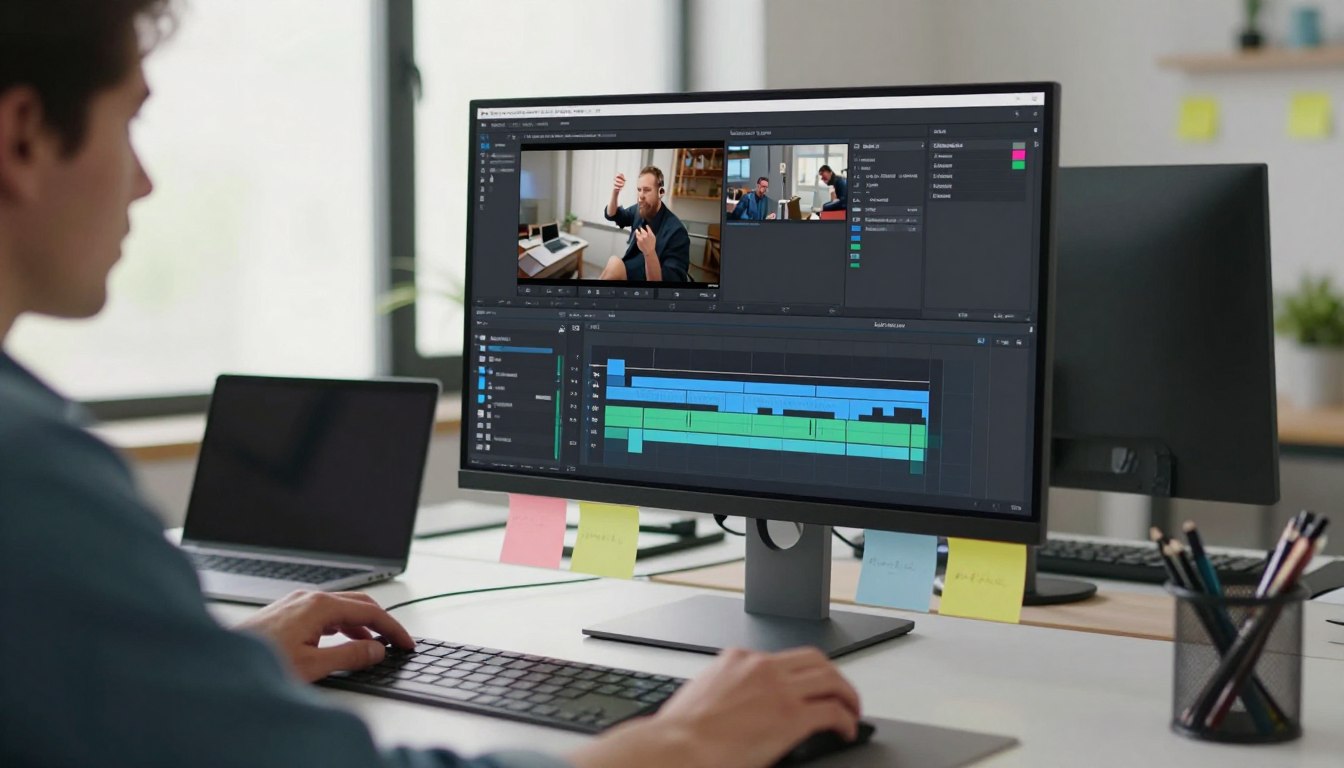
Ever wondered why some videos feel smooth while others are jarring? The key is in the timing of your cuts. Learning ai porn pmv clip trimming is more than cutting out unnecessary parts. It’s about finding the exact right moment to switch scenes.
Using timing tricks helps you guide the viewer’s attention. Brief pauses, or “breathing room,” give viewers a mental break. This simple step enhances the flow and makes your video more enjoyable to watch.
Improving your editing skills means every second counts. By mastering these basics, you’ll change how you create. You’ll find that timing tricks are essential for achieving professional results.
Key Takeaways
- Precise editing creates a more engaging experience for your audience.
- Strategic pauses provide essential breathing room for viewers.
- Mastering basic techniques improves the flow of your final video.
- Effective editing helps you maintain control over the viewer’s attention.
- Refining your workflow leads to a more professional and polished output.
Mastering the Fundamentals of AI Porn PMV Clip Trimming
Timing is key to making videos engaging and smooth. By focusing on the basics, every frame has a purpose. This is crucial for anyone wanting to improve their ai porn pmv clip trimming skills.
Understanding the Rhythm of PMV Editing
The rhythm of a project is its heartbeat. You need to find the highs and lows in the audio to match your cuts. Effective pmv trimming means syncing these with the music’s beat for a smooth watch.
Keeping a steady pace keeps viewers interested. Aligning cuts with music builds anticipation. Remember, rhythm is about knowing when to pause and when to move on.
The Role of AI in Modern Clip Selection
Today’s tech changes how we start making videos. AI tools can quickly find the best clips for you. This saves time, letting you focus on the creative side of ai porn pmv clip trimming.
But don’t just trust AI. The best results mix AI suggestions with your own ideas. Using AI for efficiency keeps your creative vision in control.
Setting Up Your Project for High-Precision Editing
Your editing journey starts before you cut the first frame. Creating a structured workspace is essential for staying focused and quick. A well-prepared workspace removes technical hurdles that slow down your creative flow.
Configuring Sequence Settings for Smooth Playback
For precise editing, your sequence settings must match your footage perfectly. If they don’t, playback can stutter, making precise adjustments hard. Always check that your timeline settings match your media before importing.
“Efficiency is doing things right; effectiveness is doing the right things.”
Using proxy workflows can help if your computer can’t handle high-resolution files. Proxies make scrubbing and feedback fast, crucial for pmv trimming. Keeping playback resolution low keeps your software running smoothly during edits.
Organizing Your Media Assets for Quick Access
A messy project file slows you down. A consistent folder structure saves hours of frustration. Use a clear hierarchy for your assets:
- Footage: Separate folders for raw clips, B-roll, and overlays.
- Audio: Dedicated space for soundtracks, sound effects, and voiceovers.
- Project Files: A specific location for auto-saves and project backups.
- Exports: A clean directory for your final rendered files.
Descriptive file names help you find clips quickly. Less time searching means more for creativity. Consistency in file management leads to a better final product.
Selecting the Right Software for Micro Edits
Your choice of editing platform is key for making micro edits smoothly. High-intensity content needs software that responds fast. The right tool ensures your edits are precise.
Evaluating Adobe Premiere Pro for Professional Trimming
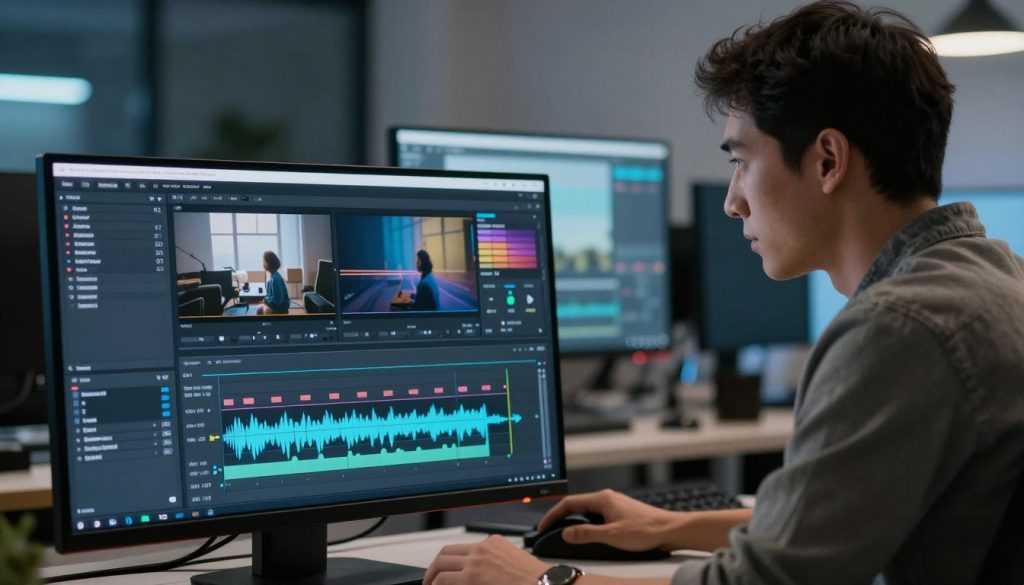
Adobe Premiere Pro is great for those who value speed and flexibility. Its timeline interface makes micro edits easy with simple shortcuts. The ripple edit tools help keep your sequence smooth.
This software handles complex projects well. The trim monitor lets you see your cuts live. This is crucial for matching visuals with audio.
Leveraging DaVinci Resolve for Color and Timing Precision
DaVinci Resolve shines for color accuracy and timing. Its color grading suite helps you refine visuals and cuts together. This saves time in the final stages.
The software also offers stable frame-accurate navigation. Its playback engine works well even with many layers. Precision is its hallmark, making it perfect for a professional look.
Syncing Visuals to Audio Beats for Maximum Impact
Making a professional video is more than just good footage. It’s about matching your visuals with the audio perfectly. When you do, your viewers get fully pulled into your story. Learning these timing tricks can turn a simple edit into a movie-like experience.
Identifying Key Beat Markers in Your Soundtrack
Before you start cutting, you need to know your audio’s structure. Most editing software shows an audio waveform, like a map for your project. Look for the peaks in the waveform, which are the loudest parts.
Mark these beats on your timeline to stay organized. This saves time and keeps your edits consistent. By marking these points early, you lay a strong base for your project.
Aligning Visual Cuts with Percussive Elements
After mapping your beats, it’s time to place your clips. Try to make every transition land on a beat, like a snare drum or bass kick. This makes your video flow smoothly and feel polished to the audience.
To get the best results, remember these tips:
- Zoom in on the timeline: Use frame-by-frame to make sure your cut starts right on the beat.
- Use visual cues: Look for sudden changes in audio energy to know when to start a new clip.
- Maintain consistency: Use these timing tricks throughout your edit to keep the rhythm steady and engaging.
Even small changes can greatly improve your video. When you match your visuals with the music, you create a seamless experience. This keeps viewers watching until the end.
Advanced Techniques for AI Porn PMV Clip Trimming
Improving your production quality means finding the right mix of automated tools and your own touch. While software can do a lot, it’s your personal adjustments that make the edit shine. Strategic intervention is key to making your project feel real, not just automated.
Automating Clip Selection with AI Plugins
Today’s plugins have changed the game for ai porn pmv clip trimming. They quickly spot the most exciting parts of your footage. This saves you hours of manual work, letting you focus on the story you want to tell.
- Use scene detection to isolate key moments instantly.
- Apply metadata filters to sort clips by intensity or lighting.
- Batch process your raw files to maintain a consistent visual style.
Manual Refinement of AI-Generated Cuts
Even the best software needs a human touch to keep the edit engaging. After the AI does its first cut, you need to check and adjust. This is where you turn a bunch of clips into a smooth, professional video.
“The machine provides the canvas, but the editor provides the soul of the story.”
Pay attention to how your clips start and end to match your music. Small, deliberate changes in timing can make a big difference. By tweaking these automated cuts, you make your project stand out with a smooth, intentional flow.
Utilizing Frame-by-Frame Trimming for Seamless Transitions
Learning to trim frame by frame lets you control your story’s flow perfectly. This skill goes beyond simple cuts. It lets you match every visual change with your project’s rhythm. This is key to making professional-grade results that keep viewers hooked.
Navigating the Timeline with Keyboard Shortcuts
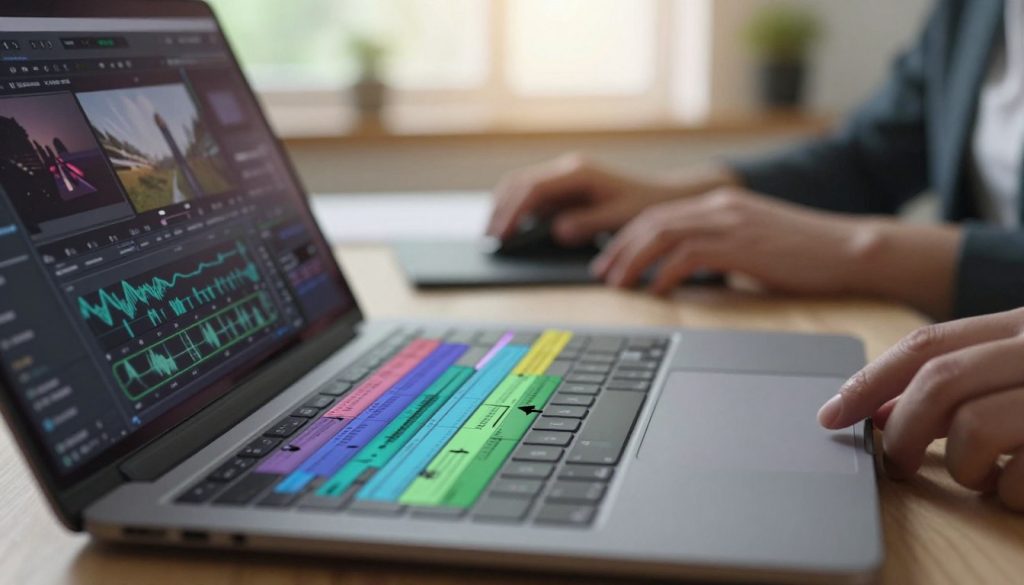
Being efficient in editing means moving through the timeline quickly. Using keyboard shortcuts helps you focus on the visual content instead of the interface. This change is the first step to mastering micro edits that mark high-quality productions.
Most editing software lets you assign custom keys to actions like “nudge left” or “nudge right.” Learning these shortcuts helps you keep a steady pace while refining your sequence. Your speed will jump once these actions become second nature.
Achieving Sub-Second Accuracy in Your Cuts
Getting sub-second accuracy needs a deep grasp of your software’s trimming tools. When you make micro edits, you’re fine-tuning the emotional impact of each transition. Even a small change in frames can greatly alter how viewers see your work’s pace.
To perfect your cuts, zoom in on the timeline until you see each frame clearly. This detailed view lets you pinpoint the exact start or end of a movement. By making these precise adjustments, your transitions will feel smooth and natural, not jarring.
| Action | Adobe Premiere Pro | DaVinci Resolve |
|---|---|---|
| Nudge Left (1 Frame) | Left Arrow | Left Arrow |
| Nudge Right (1 Frame) | Right Arrow | Right Arrow |
| Trim Edit Point | Q / W Keys | Shift + [ / ] |
| Add Edit | Ctrl + K | Ctrl + \ |
Applying Timing Tricks to Enhance Visual Flow
Learning timing tricks can make your edits look professional. By controlling when a clip starts or ends, you shape how viewers see your story. These small changes make your video feel smooth, not choppy.
Using J-Cuts and L-Cuts for Fluidity
J-cuts and L-cuts are key timing tricks for a natural flow. A J-cut starts the next clip’s audio before the video changes. This smoothly connects scenes, keeping viewers interested.
An L-cut, on the other hand, keeps the current clip’s audio going into the next scene. This avoids the sudden stops that amateur videos often have. These techniques help guide the viewer’s eye smoothly through your video.
Creating Tension Through Strategic Pause Placement
Timing tricks can also add emotional depth to your content. Strategic pauses let viewers absorb what they’ve seen. A brief hold on a frame can create palpable tension that grabs attention.
It’s okay to pause before moving to a fast-paced scene. These breaks contrast with quick cuts, making your video more lively. Mastering these timing tricks keeps your edits engaging from start to finish.
Refining Your Edits with Speed Ramping and Motion Effects
You can make your footage more exciting by playing with speed and motion. These techniques turn your micro edits into powerful visual stories. They make sure your video matches the energy of the music and keeps the viewer engaged.
Implementing Variable Speed for Dynamic Impact
Variable speed ramping lets you change a clip’s speed over time. Instead of playing it at a fixed rate, you can speed up or slow down to highlight certain moments. This is great for micro edits where every detail matters.
To do this, use your editing software’s time remapping tools to set keyframes. By tweaking the velocity curve, you get smooth transitions between slow and fast parts. This dynamic control keeps your video in sync with the music.
Adding Subtle Motion to Static Clips
A still image can feel out of place in your project. Adding a small zoom or pan, like the Ken Burns effect, can fix this. It keeps the video interesting and prevents viewers from getting bored.
For micro edits, keep these movements small to avoid taking away from the main story. A tiny scale increase can make a big difference. Consistency is key when using these effects to keep your video looking professional.
| Technique | Primary Benefit | Best Use Case |
|---|---|---|
| Speed Ramping | Adds intensity | Action-heavy sequences |
| Digital Pan | Creates movement | Static portrait shots |
| Slow Zoom | Builds focus | Highlighting details |
| Time Freeze | Emphasizes impact | Dramatic transitions |
Troubleshooting Common Timing and Sync Issues
Even the most skilled editors sometimes run into technical problems. These issues can mess up your editing flow. Spotting these problems early helps keep your work top-notch.
Fixing Audio Drift in Long-Form Edits
Audio drift happens when your audio file’s sample rate doesn’t match your project settings. Over time, this causes the audio to get out of sync with the video. Always check your project settings before adding media.
To fix drift, use the “Interpret Footage” feature to adjust the audio sample rate. A rate stretch tool can also help align the audio with the video. This keeps your audio and video perfectly in sync.
Correcting Mismatched Frame Rates
When video playback seems shaky or off-sync, it’s often because of different frame rates. Mixing 24fps footage with 60fps clips can confuse your software. Make sure all your footage is in the same frame rate to avoid this.
Double-check your sequence settings to match your main footage. If you need to mix rates, use “Optical Flow” to smooth out the transition. This makes your video look smoother to viewers.
| Issue Type | Primary Cause | Recommended Solution |
|---|---|---|
| Audio Drift | Sample rate mismatch | Re-interpret audio settings |
| Jittery Motion | Frame rate conflict | Conform to sequence rate |
| Sync Lag | Variable frame rate | Transcode to constant rate |
Optimizing Your Workflow for Faster Production
Mastering your production workflow lets you focus on creativity, not repetitive tasks. When you remove obstacles in your editing, you boost your output. Efficiency is key for a pro editor who values every second in the timeline.
Creating Custom Presets for Repetitive Tasks
You probably do the same tasks on every project, like color correction or audio adjustments. Instead of doing these manually, make custom presets to automate them. This small change saves a lot of time on big projects.
Build a library of presets for common tasks:
- Color Grading: Save your favorite LUTs and exposure adjustments as a single preset.
- Audio Mixing: Apply standard compression and EQ settings to your voiceover tracks instantly.
- Text Styles: Keep your lower-thirds and titles consistent by saving font, size, and shadow settings.
- Transition Packages: Group your most-used transitions into a custom folder for quick drag-and-drop access.
Streamlining the Export Process for Quality
The final stage of your project should not slow you down. By streamlining your export settings, you keep quality high and rendering times low. Finding the right balance between file size and quality ensures your work looks great everywhere.
Use the table below to find the right balance for your needs:
| Export Goal | Codec | Bitrate Target | Primary Benefit |
|---|---|---|---|
| High Quality Master | ProRes 422 | High | Best for archiving |
| Web Streaming | H.264 | Medium | Fast upload speeds |
| Mobile Viewing | HEVC (H.265) | Low | Small file size |
Always test your export settings on a short clip before rendering the whole project. This proactive approach saves time if the settings aren’t right. By improving these technical steps, your production stays fast, consistent, and top-notch.
Conclusion
Learning to trim clips and time your edits is a mix of skill and creativity. You now have the tools to make raw footage shine. Your projects will stand out with impact.
Using keyboard shortcuts in Adobe Premiere Pro or DaVinci Resolve keeps your pace steady. This lets your personal style shine in every frame you choose.
Keep practicing to get better at editing. Try new AI plugins and timing tricks to explore your creativity. Your skill in matching visuals with audio will make your work unique.
Stay up-to-date with new software and trends. Share your edits with others to get new ideas. Your focus on detail will make your work engaging and professional.
FAQ
How can I improve the flow of my video using pmv trimming techniques?
To make your video flow better, learn pmv trimming. It helps create “breathing room.” This means adding pauses to give your audience a break. It makes your edits feel natural, not rushed.
What are the best timing tricks for creating seamless transitions?
For smooth transitions, use timing tricks like J-cuts and L-cuts. These tricks offset audio and video. They guide the viewer smoothly into the next scene, avoiding sudden jumps.
Why should I focus on micro edits in my production workflow?
Micro edits are key for precision. They let you adjust frames to the exact beat. This is crucial for content that needs to hit the mark perfectly.
Can AI-driven software really help with the selection of clips?
Yes, AI can help pick clips at the start. But, always mix these suggestions with your own ideas. This keeps your work professional and intentional.
Which software is better for high-precision trimming: Adobe Premiere Pro or DaVinci Resolve?
Both are top choices. Adobe Premiere Pro is great for trimming and integration. DaVinci Resolve is known for color and timing precision, perfect for high-end projects.
How do I ensure my visuals stay perfectly synced with the audio?
Find key beat markers in your music. Then, align your cuts with these beats. This creates a deeper experience and avoids audio drift issues.
What is the benefit of using keyboard shortcuts over a mouse for editing?
Keyboard shortcuts speed up your work. They offer precise control. Learning these shortcuts helps you make quick, accurate edits without mouse lag.
How do I fix technical errors like mismatched frame rates?
Fixing frame rate issues starts with setting up your sequence right. Proper settings ensure smooth playback and avoid export problems.
What is variable speed ramping, and when should I use it?
Variable speed ramping changes clip speed for dramatic effects. It adds energy and makes your edit fit the soundtrack perfectly.
How can I speed up my overall editing and export process?
Make your workflow more efficient by using presets and streamlining exports. This keeps quality high while cutting down rendering time.