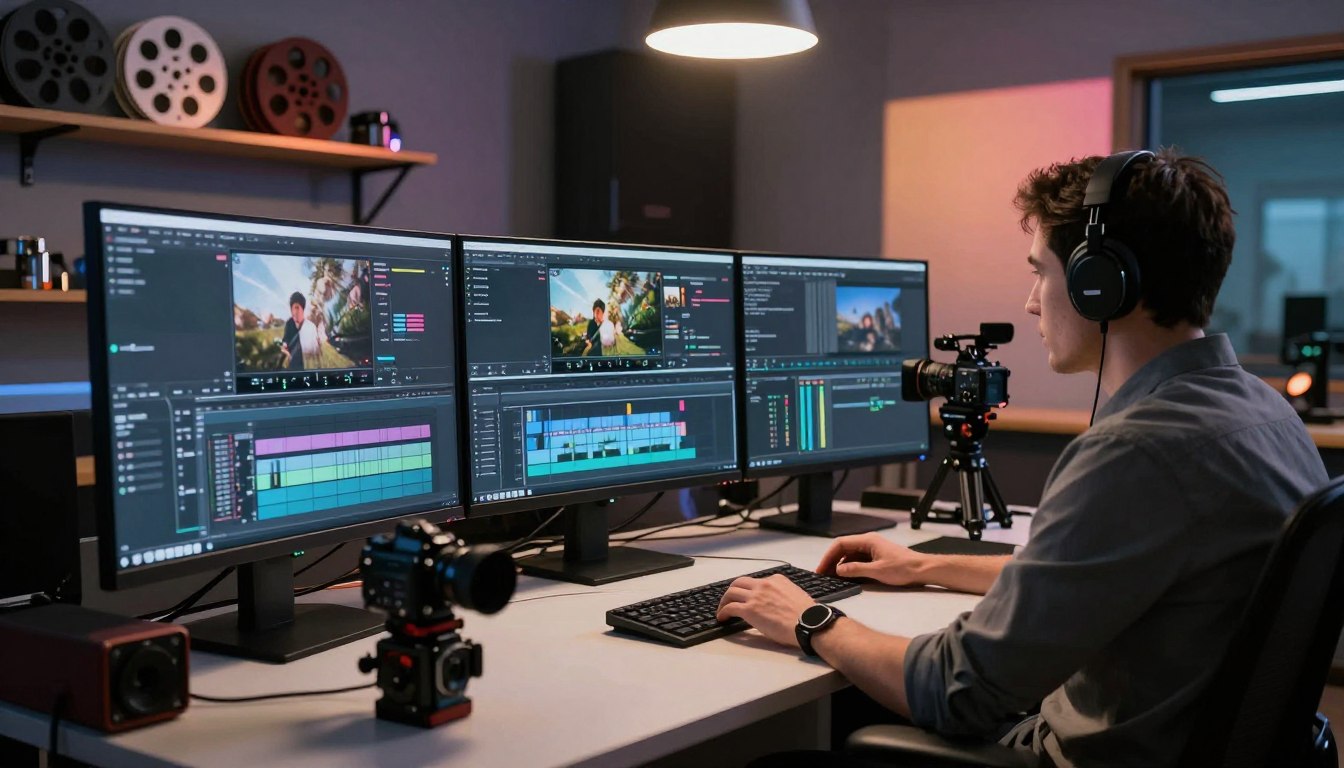
Ever wondered why your HD projects lose sharpness when you save them? Getting professional visual quality is more than just good footage. It’s about knowing the digital workflow inside out.
To meet industry standards, you need to find the right balance between file size and image quality. This guide will walk you through your next project. It ensures your final files are sharp on any screen.
We dive into the details for ai porn pmv 4k export. We aim to help you tackle the challenges of high-end video production. By following these steps, you’ll keep your videos looking stunning while saving storage space.
Key Takeaways
- Understand the essential balance between resolution and compression.
- Learn the optimal bitrate settings for high-end digital platforms.
- Discover how to maintain color accuracy during the final rendering phase.
- Master the workflow for a successful ai porn pmv 4k export.
- Implement professional file management strategies for your studio projects.
Preparing Your Project for High-Resolution Output
To get a top-notch 4k pmv export, start early. Your project settings are key to a sharp, stunning video. A solid foundation means your final video will look great.
Setting Up Your Timeline Resolution
For high-resolution video, match your timeline settings to your source material. 4K video has four times the pixels of HD. If your timeline is lower, you’ll lose detail.
Make sure your sequence frame size is 3840×2160 for UHD or 4096×2160 for DCI 4K. Consistency here avoids scaling problems and frame rate issues. This ensures your hardware works well without losing quality.
| Resolution Name | Width (Pixels) | Height (Pixels) | Total Pixels |
|---|---|---|---|
| Full HD | 1920 | 1080 | 2,073,600 |
| UHD 4K | 3840 | 2160 | 8,294,400 |
| DCI 4K | 4096 | 2160 | 8,847,360 |
Managing AI-Generated Assets and Upscaling
Working with AI-generated assets needs a careful touch. AI tools often create lower-res images that look soft on 4K timelines. Use high-quality upscaling software to match your output.
Handling these files right is key for a successful 4k pmv export. If you see blurriness, try sharpening filters or AI upscalers. These steps help your AI-generated assets look great with your 4K footage, making your video professional.
Understanding the Technical Requirements for AI Porn PMV 4k Export
Getting the technical right for your 4k pmv export is crucial for top-notch results. High-resolution media means every setting counts for clear visuals. Knowing these needs ensures your vision shines on screen.
Why 4K Matters for AI Content
AI images have intricate textures and fine details that lower resolutions can’t capture. 4K keeps these sharp, avoiding blurriness when downscaled. It’s key for the clear visuals viewers expect today.
Higher pixel density lets viewers see your work’s subtleties. Going high-res makes your ai porn pmv 4k export ready for the future. It offers a sharp, engaging experience that stands out online.
Balancing Visual Fidelity and File Size
Finding the right balance between quality and file size is tough. You need to control your bitrate to avoid quality loss while keeping files small. For example, YouTube suggests a 45mbps bitrate for 4K at 24 frames per second.
Following these guidelines keeps your visuals sharp without huge files. Too high a bitrate can cause playback problems. Too low, and you lose detail. The goal is a 4k pmv export that looks great everywhere.
Selecting the Right Codec for Maximum Compatibility
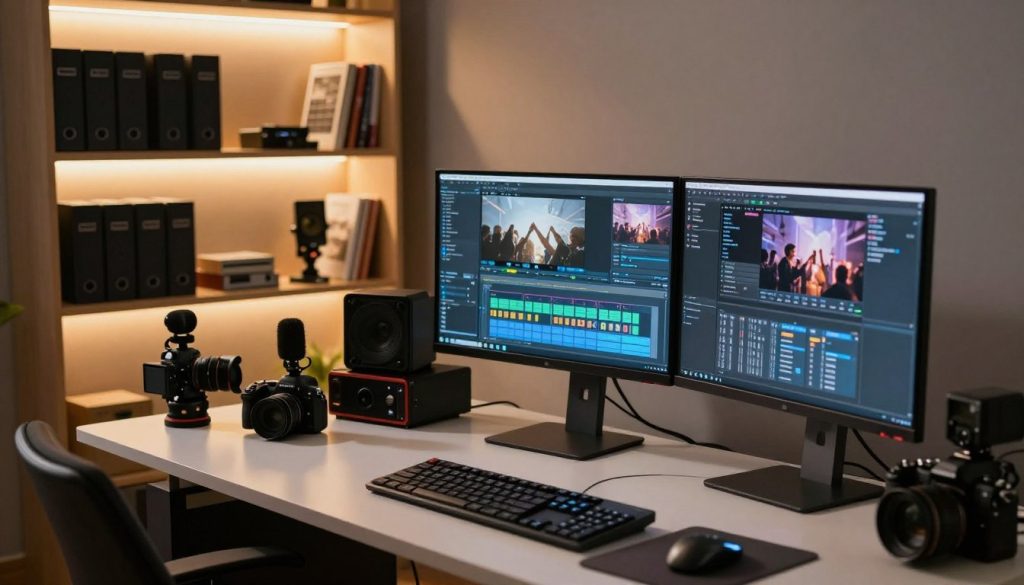
When you prepare for a 4k pmv export, the video codec you choose is key. It affects how clear and smooth your video looks on different devices. Picking the wrong one can cause problems or make files too big.
Advantages of H.265 HEVC for 4K
H.265 HEVC is a top pick for high-resolution videos. It compresses well, keeping your video sharp and files small for the web. This video codec makes sure your 4K content looks great on any screen.
When to Use Apple ProRes for Professional Grading
For professional grading, Apple ProRes is the better choice. It keeps color data precise, avoiding issues with color correction. ProRes helps keep your creative vision clear from start to finish.
| Codec Type | Primary Use Case | Compression Level | Best For |
|---|---|---|---|
| H.265 (HEVC) | Final Delivery | High Efficiency | Web Streaming |
| Apple ProRes | Professional Grading | Low/None | Editing & Color |
| H.264 (AVC) | Legacy Support | Moderate | General Playback |
Optimizing Bitrate Settings for Studio-Quality Results
Your bitrate choice is key to managing storage and visual quality in your 4K 60FPS projects. Adjusting these settings ensures your output is crisp and meets professional standards. The right bitrate choices keep files small without losing quality.
Calculating Target Bitrates for 4K 60FPS
Going to 60FPS increases your data needs. Your file size will likely double compared to 24fps or 30fps. To get studio-quality results, you need enough data to handle the extra motion without losing quality.
The table below gives a starting point for bitrates for top streaming or archival quality in 4K.
| Resolution | Frame Rate | Recommended Bitrate |
|---|---|---|
| 4K (3840×2160) | 30 FPS | 40-60 Mbps |
| 4K (3840×2160) | 60 FPS | 80-120 Mbps |
Variable Bitrate vs. Constant Bitrate Explained
Choosing the right encoding method is crucial for your goals. A variable bitrate (VBR) uses more data in busy scenes and less in stills. This method is great for digital platforms, as it saves space without losing quality.
On the other hand, constant bitrate (CBR) keeps data flow steady. This makes file sizes predictable but can waste space on simple frames. For most professional workflows, VBR is better for balancing quality and storage.
Color Space and Gamma Correction for AI Visuals
When you export AI-generated media, the color space handling is key. AI models often create images with unique colors that don’t match standard video formats. Proper color management keeps your vision consistent everywhere.
Maintaining Color Accuracy in Rec.709
Most web videos use the Rec.709 color space. If your AI assets have wider gamuts, you need to map them right. This avoids washed-out or too bright colors. Set your project to match this standard for color accuracy.
Locking your timeline to Rec.709 ensures viewers see what you meant. This is crucial for standard monitors, tablets, or mobiles. Using Rec.709 prevents color changes during compression.
Handling HDR Metadata for Modern Displays
Modern screens show more brightness and contrast than old ones. To use this, manage HDR metadata in your export. This data helps displays show your highlights and shadows well, making your visuals more vibrant and immersive.
Without correct HDR metadata, your AI visuals might look flat or lose detail. Always check your export settings for the right transfer functions. This ensures your work looks great on new TVs and gaming monitors.
| Color Standard | Primary Use Case | Brightness Range | Best For |
|---|---|---|---|
| Rec.709 | Standard Web Video | SDR (Standard) | Social Media |
| Rec.2020 | Ultra HD Content | HDR (High) | Cinematic Displays |
| P3-D65 | Digital Cinema | Wide Gamut | Professional Grading |
Frame Rate Consistency and Motion Smoothing
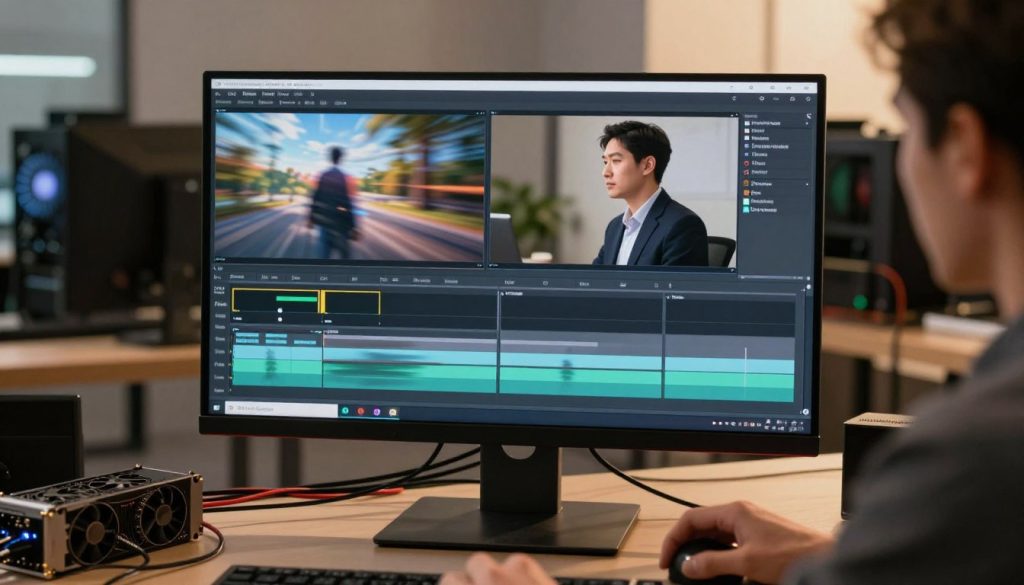
Getting professional results in your videos means focusing on frame rate consistency. When you mix AI clips with standard timelines, small differences can cause jitter. Keeping a steady frame rate makes your motion smoothing smooth and engaging for viewers.
Matching AI Generation Rates to Project Timelines
AI videos often have variable frame rates, causing playback problems in editing software. Always convert these videos to a fixed frame rate before adding them to your project. This step stops audio-visual sync issues that can happen with high-resolution videos.
It’s key to match your source material’s frame rate with your project’s settings for a smooth watch. If your project is at 60FPS, make sure your AI clips are too. This ensures no software guessing during playback.
“True visual immersion is only possible when the motion remains perfectly consistent from the first frame to the last.”
Techniques for Eliminating Stutter in Fast-Paced Edits
Fast edits can show off frame rate issues, causing stutter. Use optical flow or frame blending tools to fill in missing frames. These methods smooth out transitions in action-packed scenes.
Adjusting shutter speed during AI generation can also help. This creates natural motion blur, making movement seem more real, even at lower frame rates. Here’s a table showing how different frame rates affect your video quality.
| Frame Rate | Best Use Case | Motion Quality |
|---|---|---|
| 24 FPS | Cinematic Look | Standard |
| 30 FPS | Web Content | Moderate |
| 60 FPS | High-Action PMV | Excellent |
| 120 FPS | Slow Motion | Ultra-Fluid |
Audio Mastering for Immersive PMV Experiences
Creating a great PMV experience is not just about visuals. Your sound design is just as important. It’s key to use high-fidelity audio to make your content sound professional.
Exporting High-Fidelity Audio Tracks
When you’re ready to export, don’t forget about your audio settings. Use uncompressed formats like WAV or AIFF. Aim for 48kHz and 24-bit depth for the best quality. This mastering ensures your soundtrack sounds clear on any device.
“Sound is fifty percent of the experience, and it is often the difference between a good video and a great one.”
Syncing Audio Peaks with Visual Transitions
To keep your video flowing smoothly, sync your audio peaks with visual cuts. This keeps viewers engaged and makes edits feel on purpose. Using high-fidelity audio creates a cohesive sensory experience.
Always check your audio levels to avoid distortion. Keep dialogue levels between -12db and -15db. Proper mastering at these levels makes your audio sound balanced and strong on any speaker system.
Advanced Encoding Techniques in Adobe Premiere Pro and DaVinci Resolve
By tweaking how your computer handles video data, you can cut down render times a lot. Getting top-notch results isn’t just about using high-quality files. It’s also about knowing how your software and hardware work together. Using hardware acceleration makes sure your system performs its best during export.
Utilizing Hardware Acceleration for Faster Renders
Editing tools like Adobe Premiere Pro and DaVinci Resolve are built to use your graphics card. Premiere Pro uses the GPU for effects, so make sure your project settings are right. When you turn on hardware-based encoding, your computer spreads the work better.
This stops your CPU from slowing down during long renders. By moving the hard work to the GPU, you keep playback smooth and cut down wait times. Always update your drivers to keep things running smoothly.
Customizing Encoding Presets for Consistent Quality
Consistency is key in a professional studio. Instead of changing settings for every project, create custom presets. These presets let you keep your bitrate choices the same, ensuring quality without changes.
When making presets, think about the right balance between file size and quality. Smart bitrate choices early on can prevent common issues with high-resolution files. Save a preset that works for you to make future projects easier.
Troubleshooting Common Export Artifacts and Glitches
Even the most polished projects can have unexpected visual errors during the final render. You might find glitches in your high-resolution output that spoil the final look. It’s key to know how to spot and fix these export artifacts for any serious creator.
Identifying Compression Blocking and Banding
Compression blocking shows up as small, square distortions in fast-moving parts of your video. These problems usually come from bitrate choices that don’t give enough data for detailed scenes. If your bitrate is too low, the encoder can’t keep up, leading to pixelation.
Banding shows as visible lines in smooth areas like skies or shadows. It happens when the color depth isn’t enough for the image’s complexity. You can often fix these by upping your target bitrate or using a higher-quality encoding profile.
Fixing Flickering Issues in AI-Generated Sequences
AI content often has unique challenges, especially with keeping frames stable. You might see flickering issues when the AI can’t keep frames consistent. This creates a distracting strobe effect that can ruin your project’s immersion.
To solve this, try using frame-blending techniques or AI-denoising plugins in your post-production. The best way to avoid these glitches is to ensure your source material is stable before exporting. Always check your footage at full resolution to spot these problems early.
| Artifact Type | Primary Cause | Recommended Fix |
|---|---|---|
| Compression Blocking | Low Bitrate | Increase Target Bitrate |
| Color Banding | Insufficient Depth | Use 10-bit Encoding |
| AI Flickering | Temporal Instability | Apply Frame Blending |
Conclusion
Creating top-notch visual content needs a deep understanding of your tools. Mastering the export process is key. It turns your creative ideas into a polished final product.
You now know how to handle complex settings in Adobe Premiere Pro and DaVinci Resolve. These skills help you make visuals that grab your audience’s attention on any screen.
Keep practicing to get better at your workflow. Focus on every detail during the render phase. This ensures your projects look their best.
Your dedication to quality will make your work stand out in a busy digital world. Keep trying new things to improve your creative work.
Share your work with the editing community. You’ll get new ideas and feedback. We can’t wait to see the high-quality projects you make with these advanced techniques.
FAQ
What is the ideal bitrate for a high-quality 4k pmv export?
For a 24fps project, aim for a 45mbps bitrate. For 60fps content, increase to 80mbps to 100mbps. This keeps your video clear and prevents pixelation.
Why is mastering audio just as important as the 4K visuals?
Good audio makes your video feel immersive. Keep dialogue levels between -12db and -15db. This ensures your audio sounds great on any device.
Should I use H.264 or H.265 for my final 4k pmv export?
Choose H.265 HEVC for 4K. It compresses better than H.264, saving space without losing quality. This is key for 4K’s heavy data needs.
How do I fix the “banding” effect in dark scenes of my PMV?
Banding happens with low bitrates or 8-bit exports. Try 10-bit color and add a bit of noise or grain. This smooths out dark areas.
Does exporting in 60FPS significantly increase the file size?
Yes, 60FPS doubles the file size compared to 24fps or 30fps. Plan your storage and bandwidth for this extra data.
What is the benefit of hardware acceleration during the render process?
Hardware acceleration, like NVIDIA NVENC, speeds up encoding. It moves the work from your CPU to your GPU. This makes 4K projects faster and more efficient.