Ever wondered why some creative projects take off while others don’t? It often comes down to the prep work done before starting. Creating a professional environment is key to reaching your artistic goals.
Following a pmv process keeps your technical and creative skills sharp. This way, you dodge common mistakes that can derail your project. Good onboarding lets you concentrate on your vision, not fixing problems.
Success is about being accountable and respectful. Organizing your work early lets your ideas flourish. This guide helps you get your workspace and mind ready for a smooth production.
Key Takeaways
- Establish a professional environment to boost your creative output.
- Use a structured checklist to prevent common project pitfalls.
- Prioritize accountability and respect to maintain workflow momentum.
- Ensure your technical foundation is secure before starting production.
- Focus on your artistic vision by minimizing early-stage frustrations.
Preparing Your Hardware and Software Environment
Creating a top-notch workstation is key for AI video production. Your machine must handle big tasks without freezing. A detailed setup list ensures your hardware and software work well together.
Optimizing Your Workstation for AI Processing
Your Graphics Processing Unit (GPU) is the core of your AI setup. Choose cards with lots of VRAM for complex models. Effective cooling solutions are crucial to avoid overheating under heavy loads.
Don’t forget about RAM and fast storage. AI needs lots of memory for quick data access. Here’s a setup list to check your hardware:
- GPU: NVIDIA RTX 3060 or higher with at least 12GB VRAM.
- RAM: Minimum of 32GB for multitasking and big video files.
- Storage: NVMe SSD for fast rendering.
- Cooling: Liquid cooling or high-airflow cases for stability.
Essential Software and AI Tool Integration
With your hardware set, focus on software. Install the latest GPU drivers for AI compatibility. Proper configuration boosts your workflow.
You’ll need Python environments, AI interfaces, and video editing tools. Integrating these tools requires careful planning to avoid conflicts. Update your setup list as you add new tools to keep your workspace efficient.
Defining Your Creative Vision and Theme
Your creative vision is the foundation for all your decisions in production. Having a clear direction from the start keeps you focused and efficient. Without a plan, it’s easy to lose sight of your goals and produce uneven work.
Selecting Your Niche and Aesthetic Style
Choosing a niche helps you attract a dedicated audience. Try out different themes to find what fits your interests and skills. Consistency is crucial for creating a recognizable brand in the digital world.
After picking a niche, decide on a consistent aesthetic style. This includes a color palette, lighting, and visual filters. A unified visual language makes your work look more professional and intentional.
Storyboarding Your PMV Sequence
Storyboarding is essential for a smooth visual narrative. It helps you spot pacing issues before editing. This saves time and avoids costly revisions later.
Begin by sketching the video’s key moments to set a rhythm. Plan where to put fast-paced and slow segments. Effective planning keeps your video engaging from start to finish.
Sourcing and Managing High-Quality Assets
Starting a professional video project means using top-notch source files. Collecting clips and audio is the first step. Proper management keeps your workflow smooth and your final product high-quality.

Legal and Ethical Considerations for Source Material
Respecting intellectual property is crucial in digital content creation. Always check if you have the right permissions or licenses for your media. Copyright compliance helps avoid legal issues and keeps your project viable.
Ethical sourcing goes beyond avoiding legal trouble. It’s about knowing where your assets come from and using them as intended. Always review the terms of service for any platform or library you use.
Organizing Your Media Library for Efficient Access
A messy workspace can slow you down and cause frustration. Use a consistent naming system for your files, like dates or tags. This makes finding specific clips quick and easy.
Having a clear folder structure is also key for your project’s health. Keep raw footage, audio, and drafts separate. This structured approach helps avoid data loss and makes sharing your work easier.
| Strategy | Primary Benefit | Time Investment |
|---|---|---|
| Standardized Naming | Instant Searchability | Low |
| Folder Categorization | Reduced Clutter | Medium |
| License Tracking | Legal Safety | High |
| Cloud Backups | Data Security | Medium |
Mastering AI Porn PMV Onboarding and Tool Configuration
Once your hardware is ready, it’s time to fine-tune your AI environment. A structured pmv onboarding process ensures your software aligns with your vision. This avoids common bottlenecks that slow down production.
Setting Up Your AI Model Parameters
Your setup list should focus on balancing speed and artistic quality. Adjusting sampling steps and guidance scale helps control AI accuracy. Precision is key for a consistent look in your video.
“Quality is never an accident; it is always the result of high intention, sincere effort, intelligent direction and skillful execution.”
Try different seeds and noise schedules to find your project’s perfect look. Document these settings for future use. Keeping a log of your successful configurations is a best practice for creators.
Configuring Upscaling and Enhancement Settings
After creating your base frames, apply the right upscaling techniques for a professional finish. Choose models that preserve detail without artifacts. Consistency is key when switching scenes.
Use these essential steps to enhance your work:
- Apply face restoration tools to maintain character identity.
- Use denoising filters to clean up background textures.
- Select appropriate upscaling algorithms for sharper edges.
Mastering these settings turns raw AI output into a polished product. Completing your pmv onboarding ensures your video meets audience expectations. Always review your setup list before starting a new render for the best results.
Establishing a Consistent Workflow for Video Editing
Mastering a consistent workflow can greatly improve your video projects. By following best practices from the start, you keep your work high quality and work faster. A set routine helps you focus on your creative vision without worrying about the process.
Syncing Visuals with Audio Tracks
Getting your visuals and audio tracks to sync up is key for an immersive experience. Find the main beats in your music to match your cuts. This makes every transition smooth and deliberate.
When your clips and audio are in sync, viewers stay engaged. Following best practices prevents jarring edits that disrupt the story. Always review your timeline to ensure visuals and sound work together well.
Utilizing AI-Assisted Transitions and Effects
Today’s editing software has AI tools that make transitions and effects easy. These tools add a professional touch without the need for hours of manual work. This lets you focus more on the story and less on technical details.
Using AI tools is a crucial best practice for today’s creators. These systems analyze your footage to suggest the best transitions. Adopting this technology can greatly increase your productivity without lowering the quality of your work.
| Editing Task | Manual Approach | AI-Assisted Approach |
|---|---|---|
| Beat Matching | Time-consuming manual alignment | Automated rhythmic detection |
| Transitioning | Custom keyframe animation | Smart motion-based presets |
| Color Grading | Manual adjustment per clip | Batch style application |
| Output Speed | Slow and labor-intensive | Fast and highly efficient |
Implementing Best Practices for Rendering and Exporting
Rendering and exporting are key steps to share your creative work. They need technical precision to show your work in the best way. By following best practices, your video will look clear and work well on different platforms.
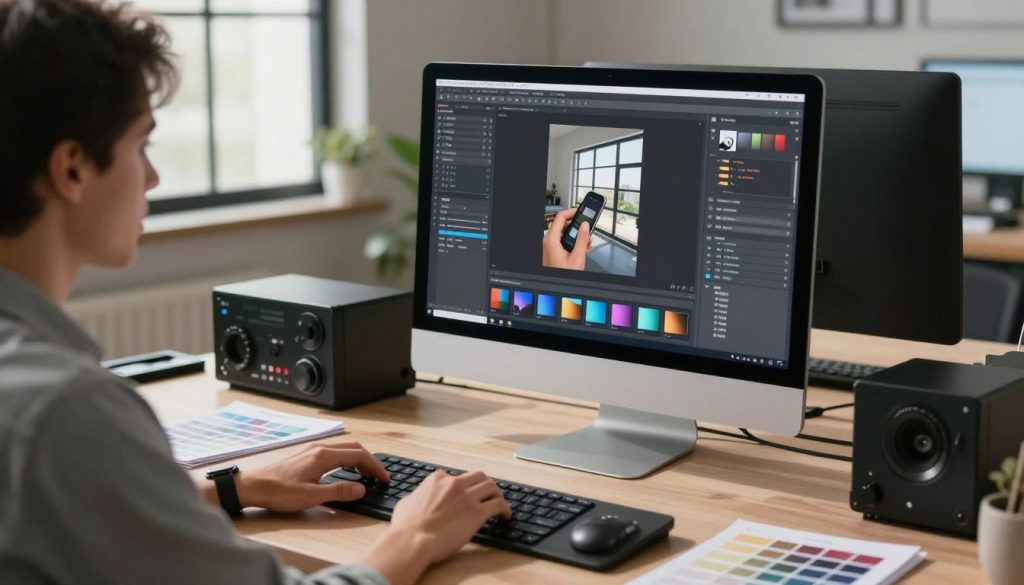
Choosing the Right Codecs and Bitrates
Picking the right codec is crucial for quality and performance. H.264 (AVC) and H.265 (HEVC) are top choices. They compress well without losing your AI visuals’ details.
Bitrate is also important to avoid poor image quality. A higher bitrate means better quality but a bigger file. Use a variable bitrate (VBR) to save space without losing quality.
Managing File Sizes for Platform Compatibility
File size and resolution matter for hosting platforms. A big file can slow uploads and cause buffering. Finding the right balance between quality and size is key.
Check the upload specs for your sharing site. Cutting from 4K to 1080p can halve file size without losing quality on mobile. Use the table below for export decisions based on platform needs.
| Platform Type | Recommended Codec | Target Bitrate | Resolution |
|---|---|---|---|
| High-End Portfolio | H.265 (HEVC) | 20-30 Mbps | 4K (2160p) |
| Social Media Feed | H.264 (AVC) | 8-12 Mbps | 1080p |
| Mobile Optimized | H.264 (AVC) | 5-8 Mbps | 720p |
Troubleshooting Common Technical Hurdles
Working with AI can be tricky. Even pros face technical problems that slow them down. A detailed setup list helps you find and fix issues fast.
Resolving AI Generation Errors
AI errors often come from not enough memory or wrong model settings. If your system crashes, check your VRAM right away. Lowering your batch size or reducing resolution can help.
Make sure your setup list has the latest GPU drivers. Old drivers can cause problems. If errors keep happening, clear your cache for a fresh start.
Fixing Sync Issues and Rendering Glitches
Sync problems happen when AI clips don’t match your project’s timing. Check your setup list for consistent frame rates. If audio and video don’t sync, re-encode your files to fix it.
Rendering issues like flickering need tweaking your export settings. If your output looks bad, try a different encoder or lower the bitrate. Keeping a setup list of good export settings saves time later.
| Issue Type | Common Cause | Quick Fix |
|---|---|---|
| Generation Crash | Insufficient VRAM | Reduce batch size |
| Audio Desync | Variable Frame Rate | Convert to constant FPS |
| Rendering Artifacts | High Bitrate | Adjust encoder settings |
| Model Load Error | Corrupt Cache | Clear temporary files |
Being proactive helps keep your creative flow going. Use your setup list to tackle problems. Regularly update your tools to avoid future issues.
Optimizing Your Content for Audience Engagement
Creating great content is just the start. To reach the right viewers, you need to follow best practices. This means making your content easy to find and keeping viewers interested.
Metadata and Tagging Strategies
Good metadata connects your video to potential viewers. Use clear, descriptive titles with the right keywords. Strategic tagging helps algorithms show your content to the right people.
Write detailed descriptions that summarize your video and include search terms naturally. This keeps your content easy to find. Clarity and relevance are key for growing your channel.
Analyzing Performance Metrics for Future Sessions
Looking at your data helps guide your future videos. It shows what parts of your videos are most engaging. This data-driven approach helps you make your videos better.
Keep an eye on important metrics to adjust your strategy. By following these best practices, you can make each new video better than the last. Use the table below to track your progress.
| Metric Category | Primary Goal | Optimization Action |
|---|---|---|
| Click-Through Rate | Improve visibility | Refine thumbnail design |
| Audience Retention | Increase watch time | Tighten pacing and edits |
| Engagement Rate | Build community | Add clear calls to action |
Conclusion
Starting your AI video production journey is exciting. It mixes technical skills with creative vision. You now know how to handle your equipment, tweak software settings, and attract viewers.
Success in this field means being flexible. See each project as a chance to get better and try new things. Consistent effort will lead to top-notch results.
Focus on what makes your content special. Use feedback to shape your future work. You have the tools to create standout content in a busy market.
Begin your next project with confidence. Your unique view is your greatest asset. Keep exploring what your AI software can do.
FAQ
What items are essential to include in my initial setup list before the first session?
Start with top-notch hardware. You’ll need an NVIDIA GeForce RTX series GPU with at least 12GB of VRAM. This is key for handling Stable Diffusion’s heavy processing.
Also, make sure you have the latest Python installed. A good video editor like DaVinci Resolve or Adobe Premiere Pro is crucial for managing your final videos.
How does the pmv onboarding process help in avoiding project misalignment?
The pmv onboarding process is like a roadmap for your creative journey. It helps you define your niche and style before you start. This ensures your technical work matches your creative vision.
By setting up a professional environment and a clear storyboard early on, you avoid the need for many revisions. This saves a lot of time.
What are the best practices for sourcing ethical and legal source material?
Always use high-quality assets with clear usage rights. Reputable platforms like Pexels, Shutterstock, or Envato Elements are great for this. They help you avoid copyright issues and keep your work professional.
How should I organize my media library to prevent data loss?
Use a strict folder hierarchy to keep your files organized. Separate raw AI clips, licensed audio, and project files. A dedicated external SSD, like a Samsung T7, is fast and safe for backups.
Which AI model parameters are most important for high-quality video generation?
Focus on the Sampling Method and CFG Scale. For realistic textures, many prefer the DPM++ 2M Karras sampler. Proper settings ensure your visuals are consistent, avoiding the “flicker” effect.
What is the most effective way to fix sync issues between audio and AI visuals?
Use the “Snap to Grid” feature in your NLE to align visuals with audio. Plugins like BeatEdit can help automate this process. This ensures your AI visuals match the music’s beat perfectly.
How can I resolve common AI generation errors or VRAM “Out of Memory” glitches?
To fix VRAM errors, try enabling xformers or lowering your generation resolution. For rendering glitches, update your CUDA drivers and clear your shader cache. This keeps your workflow smooth.
What export settings provide the best balance between quality and file size?
Use H.264 or HEVC (H.265) codec for exports. Aim for a bitrate of 15 to 25 Mbps at 1080p or 4K. This ensures your videos look great while keeping file sizes reasonable.
Why is upscaling a necessary step in the PMV production workflow?
AI models often generate content at lower resolutions. Upscaling software like Topaz Video AI or Real-ESRGAN adds detail and sharpness. This makes your final video look professional and high-definition.