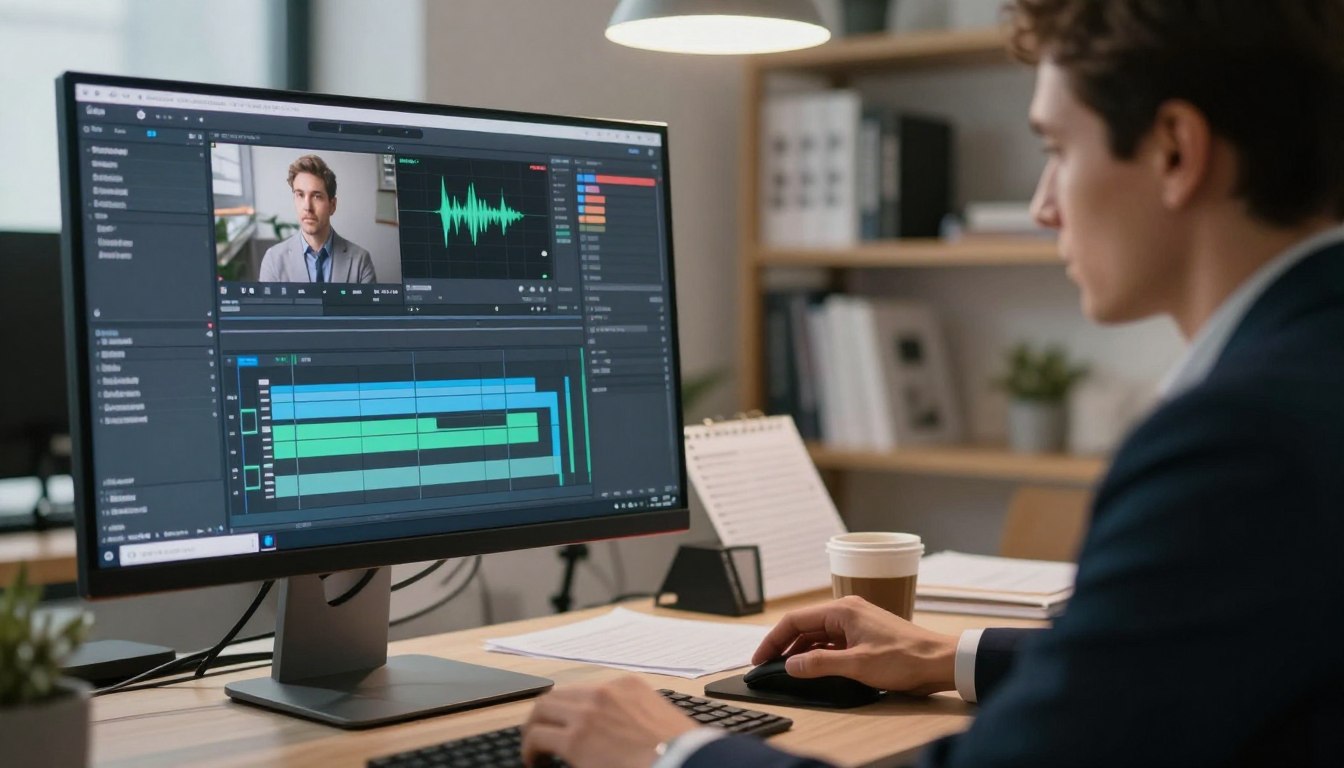
Have you ever spent hours making the perfect sequence, only to see it ruined by glitches and timing issues? Making top-notch digital content is all about finding the right mix of creativity and technical skill.
When you hit a snag, knowing what’s causing the problem is key. This guide will help you tackle common tech issues in ai porn pmv troubleshooting projects.
We’ll tackle the tough parts of keeping your edits smooth and looking great. By following these steps, you can make sure your work is top-notch and less frustrating.
Getting better at these technical details will change how you make your projects. Let’s explore the solutions that keep your creative flow going.
Key Takeaways
- Identify common causes for synchronization issues in your digital edits.
- Learn how to maintain visual fidelity during complex rendering tasks.
- Discover professional techniques to fix off-beat cuts effectively.
- Optimize your workflow to prevent future technical errors.
- Ensure your final projects meet high-quality industry standards.
Understanding the Fundamentals of AI Porn PMV Troubleshooting
Effective pmv troubleshooting starts with knowing how AI makes visual data. Understanding this helps you control your final product. This knowledge saves you from redoing work later.
Identifying Common Sync Mismatches
Sync mismatches happen when visuals don’t match the audio. You might see the action on screen not quite in sync with the music. Spotting these issues early is key for a pro editor.
Look out for these common problems:
- Visual Drift: The video gets out of sync with the audio over time.
- Beat Skipping: The AI action jumps ahead of the music beat.
- Inconsistent Pacing: The AI movement speed changes too much in one clip.
The Role of Frame Rates in AI Generation
Keeping a steady frame rate is crucial for a smooth video. AI clips often have different frame rates, causing problems. If your project settings don’t match the footage, your video might stutter.
Make sure your sequence settings match the output. Focus on frame rate stability for smooth transitions. This lets you focus on telling your story, not fixing technical issues.
Preparing Your Project for Seamless Synchronization
Getting your project set up right is key to avoiding sync issues. A clean timeline structure helps prevent errors early on. This saves you from hours of trouble later.
Setting Up Your Timeline in Adobe Premiere Pro
Your project starts with the right sequence settings in Adobe Premiere Pro. Make sure your sequence frame rate matches your footage. This keeps everything in sync, especially with AI projects.
- Verify that your sequence timebase matches your primary video assets.
- Use consistent pixel aspect ratios to avoid scaling artifacts.
- Keep your audio sample rate at 48kHz for professional compatibility.
Aligning Audio Waveforms with Visual Beats
Next, work on audio alignment. Expand your audio tracks to see the waveforms. These peaks show where your beats are.
Match these peaks with your video cuts for a smooth flow. If audio and video are off, adjust the clip position. This manual audio alignment is crucial for quality results.
Using Markers for Precision Timing
For precise timing, use markers on your music track. Press “M” on your keyboard over a beat to drop a marker. These markers help you place your video clips with perfect accuracy.
Markers make your video synchronization process more structured. Locking your edits to these points keeps your project stable and rhythmic.
Fixing Off-Beat Cuts in Your Timeline
Getting the perfect rhythm in your video is all about controlling each frame. When your cuts don’t match the audio, your project loses its impact. A sync fix can bring back the flow, keeping your content engaging.
Adjusting Clip Speed and Duration
At times, a clip might be off by a fraction of a second. You can use the Rate Stretch tool or the Speed/Duration menu to adjust it. This professional editing trick helps you speed up or slow down footage to match your timeline.
Changing the clip’s duration ensures the visual transition aligns with the audio peak. This audio alignment is key for top-notch projects. Always play back your work to check the timing.
Utilizing Ripple Edits to Maintain Rhythm
Removing a clip can leave a gap that messes up the pacing. A ripple edit fills that gap, keeping your timeline smooth. This sync fix is crucial for maintaining rhythm without manually adjusting each file.
This method saves a lot of time in post-production. It prevents gaps that disrupt your video’s flow. Using ripple tools is a sign of professional editing.
Manual Frame-by-Frame Alignment Techniques
For key moments, you might need to adjust clips by a single frame. Most software lets you use arrow keys to move clips. This meticulous method ensures perfect audio alignment for every beat.
Focus on the waveform peaks to find the exact spot for your cut. Zooming in helps you make precise professional editing adjustments. This manual sync fix ensures your final product is flawless.
| Technique | Primary Use | Best For |
|---|---|---|
| Speed/Duration | Matching clip length to beat | Minor timing drifts |
| Ripple Edit | Closing gaps instantly | Maintaining overall rhythm |
| Frame Nudging | Perfecting audio alignment | High-precision cuts |
Addressing AI-Specific Artifacts and Glitches
Polishing AI-generated content is more than basic editing. It needs specific artifact removal techniques for a professional look. AI models often create unpredictable visual noise that can pull your audience away from the main subject. By spotting these issues early, you can keep your project’s visual quality high.
Cleaning Up Flickering Frames
Flickering is a common problem with AI models. It shows up as quick changes in brightness or texture between frames. To fix this, use temporal stabilization tools that check the brightness levels across your timeline.
Remember, using heavy denoisers to fix flickering can be hard on your system. These tools can add 2–4 GB of memory overhead per frame. Watch your system performance closely to avoid crashes when working with high-resolution sequences.
Managing Motion Blur Issues
AI motion blur can look unnatural or smeared. To remove these artifacts, you need to tell apart real motion from digital glitches. You can fix this by adding a subtle directional blur or using optical flow plugins to smooth out frame transitions.
If the blur is still a problem, try re-generating the segment with a lower motion setting. Consistency is crucial when handling complex movements. By improving how you handle these glitches, your final product will be sharp and engaging for your audience.
Optimizing Your Workflow to Prevent Sync Drift
Preventing sync drift starts with optimizing your technical environment before you even begin cutting. When your system struggles to handle high-resolution assets, video synchronization often suffers. By fine-tuning your background processes, you create a stable foundation for your creative work.
Managing Cache Files and Scratch Disks
Your choice of storage location for cache files plays a critical role in playback stability. Disk I/O bottlenecks caused by slow texture reads can lead to frame-to-frame speed variance. This ruins your timing. Always aim to keep your cache on a fast NVMe SSD rather than a mechanical hard drive.
Effective project optimization involves clearing your cache regularly to prevent file corruption. If your scratch disk becomes too full, the software may struggle to write temporary files. This leads to stuttering. Ensure your drive has enough free space to handle the heavy data demands of AI-generated content.
Hardware Acceleration Settings in DaVinci Resolve
DaVinci Resolve relies heavily on your GPU to maintain workflow efficiency during complex edits. You should verify that your hardware acceleration is enabled in the preferences menu. This offloads processing tasks from your CPU. It allows the software to decode frames faster, keeping your audio and video perfectly aligned.
To maximize your performance, consider these essential steps for your setup:
- Update your GPU drivers to the latest version to ensure compatibility with new AI features.
- Set your render cache format to a codec that balances quality and speed, such as ProRes or DNxHR.
- Use a dedicated drive for your media cache to avoid conflicts with your operating system.
- Monitor your system resources during playback to identify potential hardware bottlenecks early.
By focusing on these technical details, you improve your overall workflow efficiency. Consistent project optimization ensures that your software remains responsive throughout the entire editing process. When your hardware is configured correctly, you can focus on the creative aspects of your project without worrying about technical errors.
Resolving Common Render Errors and Export Failures
When your project hits a wall during the final export, it’s often due to technical issues. These export issues can show up as black outputs, software crashes, or slow frame processing. Finding the cause can save you hours of frustration.
Troubleshooting Codec Incompatibility
A common reason for render failure is using an unsupported codec. If your software can’t encode the data, it will stop or produce a bad file. Stick to standard formats like H.264 or ProRes for best results.
Make sure your sequence settings match your export settings. Mixing high-frame-rate AI footage with standard video? Choose an output codec that supports variable frame rates or convert your assets first.
Managing Memory Overload During Export
Complex AI projects can really push your hardware. Running out of RAM means your export will fail. Proper memory management helps handle these heavy loads.
Crashes happening? Try lowering your texture resolution from 8K to 4K. Also, turn off heavy denoisers or complex effects in the final pass. Clearing your cache files before exporting gives your system the space it needs.
Adjusting Bitrate and Encoding Settings
Getting your bitrate right is key in codec management. A too-high bitrate can cause export issues, while too low can hurt your video quality. Find a balance that works for your AI visuals.
For top-quality projects, use Variable Bitrate (VBR) 2-pass encoding. It gives more data to complex scenes and saves space on simple ones. Mastering these settings helps avoid render failure and ensures your final video looks great.
Advanced Techniques for Complex PMV Projects
When your projects get more complex, simple editing methods don’t cut it. You need sophisticated strategies to work with high-resolution assets. This ensures your production stays smooth and professional.
Handling High-Resolution AI Upscaling
Upscaling AI content can introduce unwanted noise or visual issues. It’s crucial to remove these artifacts effectively. Use noise reduction filters early to avoid problems later in pmv troubleshooting.
Make sure your upscaling settings match your project’s frame rate. Wrong settings can cause jittery motion, harming viewer immersion. Fine-tuning your upscaling ensures every frame is of high quality.
Managing Large Project Files and Proxy Media
Big files can slow down your system, causing crashes and slow performance. Good memory management keeps your system stable with high-bitrate media. Use proxy workflows to keep editing smooth.
Proxies let you edit with lighter versions of your footage, easing hardware strain. After editing, switch back to high-resolution files for the final export. This method is key for pmv troubleshooting and artifact removal.
| Strategy | Primary Benefit | Resource Impact |
|---|---|---|
| Proxy Workflow | Smooth Playback | Low CPU/RAM |
| Cache Clearing | System Stability | High Disk Space |
| Memory Management | Prevents Crashes | Optimized RAM |
By using these advanced techniques, you can manage demanding projects. Good memory management and file handling keep your workflow efficient and error-free.
Software-Specific Solutions for Popular Editors
Every professional editing suite has its own technical challenges. Whether you’re working on complex visual effects or simple cuts, knowing how your software handles data is key. By applying targeted fixes, you can keep your workflow smooth without delays.
Fixing Render Crashes in Adobe After Effects
Adobe After Effects is a powerful tool, but it can struggle with memory-heavy projects. If you get a render failure, try clearing your disk cache first. Also, using real-time rendering can help avoid plugin errors during fast exports.
Changing your memory settings in the preferences menu can help. Make sure you have enough RAM for other apps while keeping most for rendering. This simple tweak often fixes export issues in complex projects.
Solving Sync Issues in CapCut Desktop
CapCut Desktop is great for quick edits, but it can have audio-visual drift issues. This usually happens when your source media’s frame rate doesn’t match your project settings. Always check your sequence settings before editing.
If you see sync drift after exporting, try making your source files have a constant frame rate before importing. This ensures accurate processing. Keeping a consistent workflow helps avoid these common sync problems.
Overcoming Export Bottlenecks in Vegas Pro
Vegas Pro is known for its flexible timeline, but it can struggle with high-bitrate files. Good codec management is key to avoid system stalls during output. Make sure your hardware acceleration settings are right to use your GPU.
If you still get a render failure, try changing your encoder settings to a better format. Proper codec management eases your processor’s load and avoids export issues. Optimizing these settings keeps your professional editing efficient and reliable.
Testing and Quality Control Before Final Delivery
Getting your project ready needs a careful approach to quality control. This step is your last chance to avoid any errors in your video. It’s all about making sure your work is top-notch.
Performing a Frame-by-Frame Sync Check
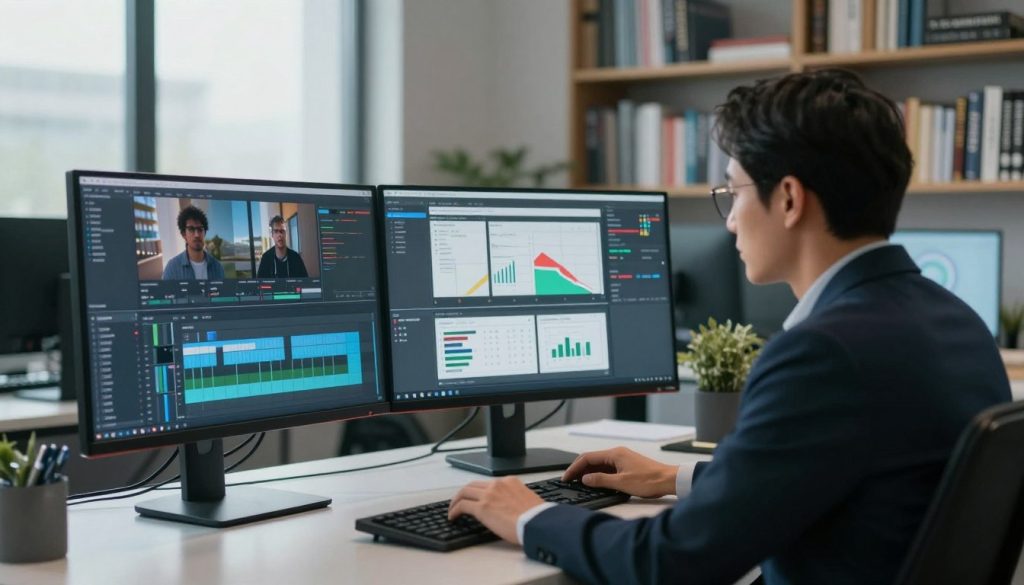
For perfect precision, review your timeline frame by frame. This way, you can check if every visual change matches the audio perfectly. It’s a detailed check that catches tiny errors you might miss otherwise.
Pay close attention to where your AI clips meet the music. If there’s a tiny delay, tweak the clip right away. This careful step makes sure your video looks smooth and deliberate to the viewer.
Verifying Audio-Visual Alignment on Multiple Devices
It’s easy to think a project looks and sounds the same everywhere. But, you need to test it on different devices. This is key for quality control, as different screens can show different issues.
The table below shows what to check during your final test to ensure a great viewing experience.
| Testing Metric | Primary Goal | Device Focus |
|---|---|---|
| Frame Alignment | Eliminate visual lag | Desktop Monitor |
| Audio Sync | Match beats to cuts | Studio Headphones |
| Color Consistency | Verify AI output | Mobile Display |
| Artifact Check | Remove glitches | Large Screen TV |
By doing these steps, you lower the chance of technical problems. Testing your ai porn pmv troubleshooting on various devices makes sure everyone has a smooth viewing experience, no matter how they watch.
Best Practices for Long-Term Project Stability
To succeed in video projects, you need a solid plan for managing files and keeping things consistent. Starting with a reliable system helps protect your work from damage. This approach is key to project optimization, keeping your work smooth from start to end.
Organizing Assets for Efficient Rendering
A messy project file can slow down rendering and cause media to go missing. Create a clear folder structure for each project. This includes folders for raw footage, audio, project files, and exported assets. Consistency is your best friend when revisiting projects later.
Organizing your assets well helps your editing software find files fast. This simple step boosts your workflow efficiency by cutting down search time. It also helps avoid software issues during export.
Maintaining Consistent Project Settings
Editors often change settings in the middle of a project. Make sure your sequence settings match your source media for frame rate stability. Changing these settings can cause playback problems and sync issues.
Always check your project settings before starting. This is especially true for AI-generated content, where frame rate stability is crucial. Locking in these settings improves project optimization and ensures a professional finish. These steps will enhance your workflow efficiency and keep your projects stable for years.
Conclusion
Creating top-notch projects needs careful planning and technical management. You now have the tools to tackle complex render errors and sync mismatches confidently.
Keeping quality control consistent is key to a polished final product. By using these methods in Adobe Premiere Pro or DaVinci Resolve, your vision will reach the audience as you intended.
Technical problems often pop up while editing. Your skill in solving these issues makes your work stand out. Keep your files organized and hardware settings right to keep your workflow smooth.
Being disciplined in every frame of your project helps improve your editing. Use these strategies to enhance your style and output. Share your progress to help others face similar technical challenges in their projects.
FAQ
How can I initiate effective pmv troubleshooting when my visuals don’t align with the audio?
Start by checking if your project’s frame rate matches your AI source footage. Mismatched rates cause cuts to fall off-beat. Use manual alignment in your timeline to match every visual with the audio peak.
What is the most reliable sync fix for off-beat cuts in Adobe Premiere Pro?
The top fix is using Ripple Edits and adjusting clip speed. Ripple Edits adjust a clip’s length without gaps, keeping the project’s rhythm. Also, align visual markers with audio waveforms in Premiere Pro for accurate cuts.
Why does AI-generated content cause system lag during the editing process?
AI media has unique issues like motion blur and flickering frames. Denoisers clean these up but add memory overhead. This can slow your system, so manage cache and scratch disks for stability.
How do I resolve common export issues and render failures in high-resolution projects?
Export problems usually stem from memory overload or codec issues. If rendering fails, try lowering texture resolution and disabling denoisers. Switching to real-time rendering in Vegas Pro or Adobe After Effects can solve plugin errors during exports.
What can I do to prevent disk I/O bottlenecks in DaVinci Resolve?
To avoid disk I/O bottlenecks, optimize your hardware settings. Store textures on NVMe SSDs for fast access. Use proxy media in DaVinci Resolve for large AI files to improve workflow and playback.
How do I fix render crashes specifically in Adobe After Effects?
Adobe After Effects crashes often due to memory issues. Clear your media cache and ensure codec settings match your delivery format. If crashes continue, render in segments or use a render queue manager to manage memory.
Is there a way to solve sync issues in CapCut Desktop for PMV projects?
Yes, in CapCut Desktop, lock your project’s frame rate before importing. Adjust clip speed to match the BPM if you notice drift. This is crucial for AI-generated VFR footage.
What quality control steps should I take before final delivery?
Before finalizing, do a frame-by-frame sync check. Test the file on different devices to ensure rhythm consistency. Organize assets and maintain consistent settings to avoid last-minute troubleshooting.